
A yacht is not a painted object
Why the industry’s language around surface protection is too narrow and why substrate-first thinking should become part of modern refit strategy…
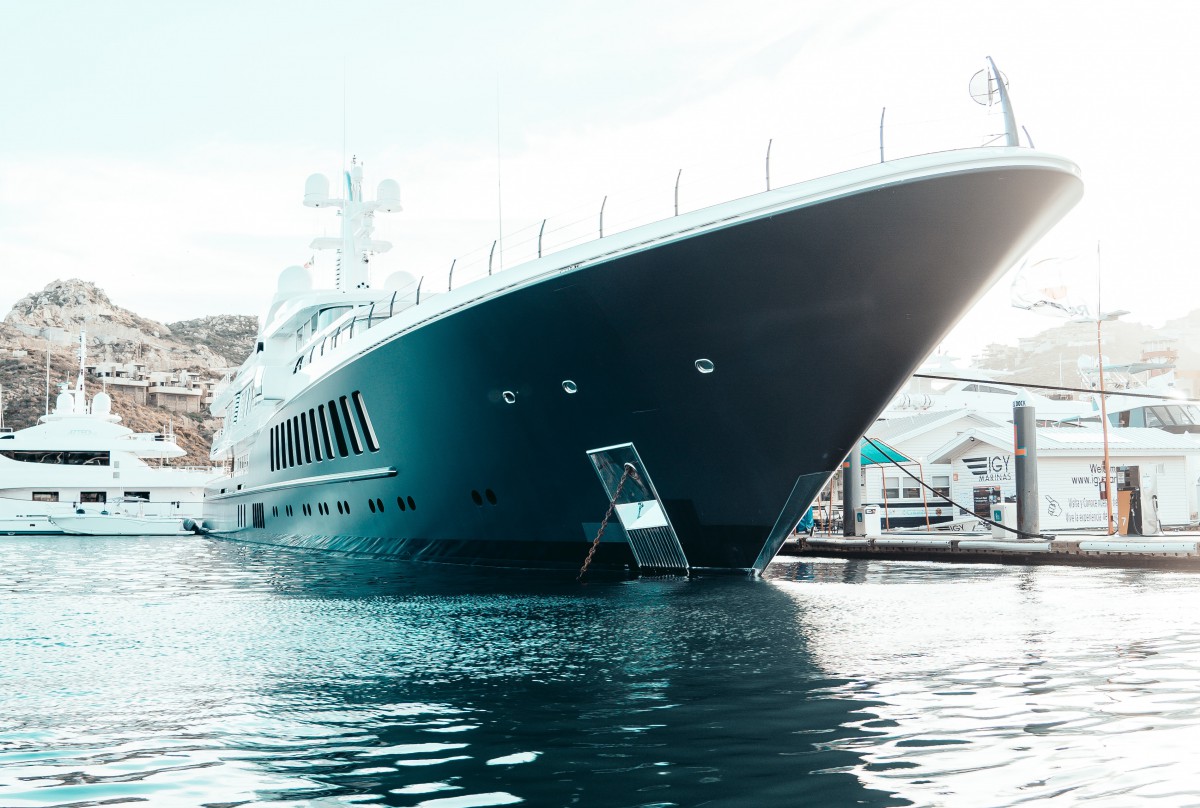
For years, the conversation around protective film in yachting has largely borrowed its language from the automotive world, such as PPF – paint protection film. There is only one problem with that terminology: a yacht is not simply a painted object. Walk around a modern yacht and the variety of surfaces becomes obvious. Painted aluminium may sit alongside gelcoat, carbon-fibre composites, glass, polished or high-gloss interior finishes and numerous specialist decorative surfaces. On larger yachts, the complexity increases further. Yet we continue to discuss film protection as if one substrate, one product category and one application philosophy can describe all of them. It can’t, so perhaps now it’s time for the marine industry to think less about paint protection and more about surface protection.
From PPF to SPF
Paint protection film remains an entirely valid term when paint is what is being protected, but in the marine environment, I believe the more useful overarching category is surface protection film – SPF. This is more than semantics. Language influences how we think about a technology, and if a captain, owner, yard or yacht manager hears “PPF”, the immediate assumption is often that the discussion concerns painted topsides or another coated exterior surface. That excludes a much larger question:
Which surfaces aboard a yacht could benefit from being protected before they require repair, restoration or replacement? That question shifts the conversation away from a product and towards the surface itself. And that is where it becomes interesting.
Start with the substrate, not the film
A professional surface-protection strategy should begin with three questions: what is the substrate, what condition is it in and what happens to that surface during the yacht's actual operation? Only then should material selection begin.
A painted surface exposed to fenders presents a different challenge from gelcoat exposed continuously to UV and salt. A high-gloss interior panel touched dozens of times each day presents a different problem from a carbon component in an exterior area. Installation methodology, adhesive behaviour, surface preparation, removability and expected service life can all differ. This is also why the marine sector should resist the temptation to simply transfer automotive processes onto yachts. A yacht is not a large car. Its substrates, environment, operational cycles, access requirements and maintenance regime are fundamentally different.
Protection before correction
Much of yacht maintenance remains reactive. A surface is exposed and it becomes scratched, weathered or damaged. It is cleaned more aggressively, polished, repaired or eventually refinished. There is nothing inherently wrong with those processes. Paint, gelcoat repair and traditional refinishing will remain essential parts of yacht maintenance, but there is another question we should ask much earlier: could we preserve the original surface before corrective work becomes necessary?
For larger yachts in particular, the real economic calculation should also include: yard time, access systems, preparation, dismantling, crew coordination, future repairability, maintenance requirements and operational downtime.
That is the principle behind a sacrificial protective layer. Instead of operational wear acting directly on the valuable underlying finish, an appropriate protection layer takes part of that exposure. If a localised area is damaged, the maintenance decision may then change from refinishing a larger original surface to replacing a defined section of protection film – and that has implications far beyond appearance.
Downtime deserves a place in the calculation
Surface decisions are frequently compared on initial project price. That is understandable, but presents an incomplete picture. For larger yachts in particular, the real economic calculation should also include: yard time, access systems, preparation, dismantling, crew coordination, future repairability, maintenance requirements and operational downtime.
A surface treatment that costs less initially may not necessarily have the lowest lifecycle cost. Equally, a more expensive protective intervention may become economically attractive if it preserves an expensive underlying finish, simplifies local repairs or avoids future corrective work. The relevant question is therefore not simply: “What does this treatment cost?”, it’s: “What does this surface cost us to maintain over its useful life?” That is a much more mature way to evaluate refit decisions.
If protection produces a measurable benefit, we should be able to prove it. If it does not, we should know that too. That is the kind of evidence the industry needs.
The maintenance question nobody has quantified properly
There is another area that deserves much more attention. Anyone who spends time around professionally maintained yachts sees the amount of effort required to keep their surfaces at the expected standard, involving water, cleaning products, labour, polishing and repeated corrective treatment. None of this means those processes are unnecessary – the standard expected aboard a yacht is extraordinarily high – but it does create an important hypothesis: If the original surface is appropriately protected, can it subsequently be maintained using less aggressive chemistry, fewer polishing cycles and fewer corrective treatments?
The marine industry should not answer that question with marketing language; it should answer it with data. Protected and unprotected areas can be compared, water consumption can be measured, cleaning chemistry can be documented. Labour time, polishing intervals, repairs and surface condition can be tracked. If protection produces a measurable benefit, we should be able to prove it. If it does not, we should know that too. That is the kind of evidence the industry needs.
From installation to lifecycle management
This way of thinking also changes what a surface-protection company should ultimately provide. Installing material and leaving the vessel should not necessarily be the end of the relationship. Imagine instead a digital surface record for the yacht. Which areas were protected? What was the underlying substrate? Which material was installed? When, which batch? Where have repairs been carried out? How has the surface aged? When should it be inspected or replaced? What maintenance regime has been used?
Over time, this creates something much more valuable than an installation record. It creates a surface lifecycle history. For yacht managers, yards, captains and ultimately owners, that information could make future maintenance and refit decisions considerably more predictable.
At OCEANSKIN Marine, we are developing this approach further towards surface lifecycle management – combining substrate-specific protection strategies with documentation, inspection, maintenance and local repair over the lifetime of the installation.
Refit should become more preventive
The superyacht industry has become extraordinarily sophisticated in many areas. We monitor engines, machinery, navigation systems and technical equipment because preventive maintenance is preferable to waiting for failure. Yet some of the yacht's most visible and expensive surfaces are still frequently treated in a largely corrective way. Perhaps surface management deserves the same shift in thinking: assess, protect where appropriate, monitor, maintain. Repair locally where possible, replace the protective layer when necessary and preserve the original asset underneath. This will not be the right answer for every surface, every yacht or every situation – and that is precisely the point. Surface protection should not begin with a roll of film. It should begin with an understanding of the surface.
The yacht of the future will not have one “surface solution”, it will have a surface strategy.
Beyond paint
PPF will remain an important technology in yachting. Vinyl will remain an extremely effective tool for reversible colour and design transformation. Coatings will continue to play their role, while traditional paint and refinishing will remain indispensable. The opportunity lies in understanding how these technologies can work together rather than treating them as competing solutions. The yacht of the future will not have one “surface solution”, it will have a surface strategy.
As refit becomes increasingly focused on efficiency, downtime, preservation and measurable environmental performance, I believe that strategy will become an increasingly important part of how yachts are maintained. Perhaps the next major development in yacht surfaces is therefore not another finish. It is learning to protect what is already there.
As an open-source platform we offer an industry-wide invitation to anyone and everyone in our sector to share their knowledge, experience and opinions. If you have an interesting and valuable contribution to make, and would like to join our growing community of guest columnists, share your ideas with us at newsdesk@thesuperyachtgroup.com
NEW: Sign up for SuperyachtNewsweek!
Get the latest weekly news, in-depth reports, intelligence, and strategic insights, delivered directly from The Superyacht Group's editors and market analysts.
Stay at the forefront of the superyacht industry with SuperyachtNewsweek
Click here to become part of The Superyacht Group community, and join us in our mission to make this industry accessible to all, and prosperous for the long-term. We are offering access to the superyacht industry’s most comprehensive and longstanding archive of business-critical information, as well as a comprehensive, real-time superyacht fleet database, for just £10 per month, because we are One Industry with One Mission. Sign up here.
Related news
Hull integrity compromised during refit
Where failure to follow ISM Code reporting requirements and lack of Class involvement exposed both crew and shipyard personnel to unnecessary risk
Crew
Looking beneath the surface
Captains of the paint industry reveal the role technology plays – and will play in the future – in increasing efficiencies
Crew
Sustainability and the coatings market
Industry leaders in the refit sector give their views on the effect of new environmental regulations and sustainability goals on paint projects
Crew
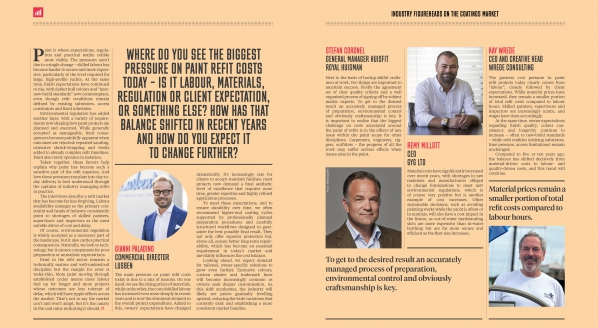
The pressures on paint refit costs today
Industry leaders in the refit sector give their views on the costs labour, materials, regulation and client expectation place on the coatings process
Crew
Preparation is everything
Bob Wagemakers, naval architect and project director at Virtue Yacht Projects, on the value a project manager brings to the unique complexities of refit
Owner
Related news
Hull integrity compromised during refit
7 months ago
Looking beneath the surface
9 months ago
Sustainability and the coatings market
9 months ago
The pressures on paint refit costs today
9 months ago
Preparation is everything
9 months ago
NEW: Sign up for
SuperyachtNewsweek!
Get the latest weekly news, in-depth reports, intelligence, and strategic insights, delivered directly from The Superyacht Group's editors and market analysts.
Stay at the forefront of the superyacht industry with SuperyachtNewsweek