What yachting refuses to say out loud
Women in yachting are speaking out. Captain Kelly Gordon asks why the industry is still not listening…
If you ask the industry, they will tell you that the conversation around women’s safety in yachting has changed, but the fact is, it has not changed nearly as much as the glossy brochures, recruitment videos and polished industry panels would suggest.
The superyacht world still sells a powerful fantasy of gorgeous anchorages, elite service, adventure, financial freedom and a lifestyle few land-based careers can match. But behind the polished teak, white uniforms and carefully curated guest experiences, there has always been another reality shaped by hierarchy, isolation, power imbalance and a deeply ingrained culture of silence.
What has changed is that women are now speaking out.
Over the last several years, more women working at sea – stewardesses, deckhands, officers, engineers, chefs and junior crew too – have begun speaking more openly about harassment, intimidation, bullying, assault, discrimination and retaliation. What was once confined to private conversations in crew messes or WhatsApp groups is now being discussed in surveys, industry forums, podcasts, training sessions and confidential reporting channels. And for the first time, those stories are being supported by structured data.
Organisations like the International Seafarers’ Welfare and Assistance Network (ISWAN), through its Yacht Crew Help Line, have reported increasing numbers of crew reaching out about abuse, bullying, harassment, discrimination and violence. More and more crew members are willing to seek help and document their experiences rather than suffer in silence, but in all statistics, we still see that women are disproportionately affected.
At a broader level, maritime bodies such as the International Maritime Organization and Women’s International Shipping & Trading Association have also drawn attention to the persistent gender imbalance across maritime industries and the barriers women continue to face in career progression and inclusion. While yachting often has a higher proportion of women than commercial shipping, particularly in interior departments, that representation has never guaranteed safety, equity or protection from abuse.
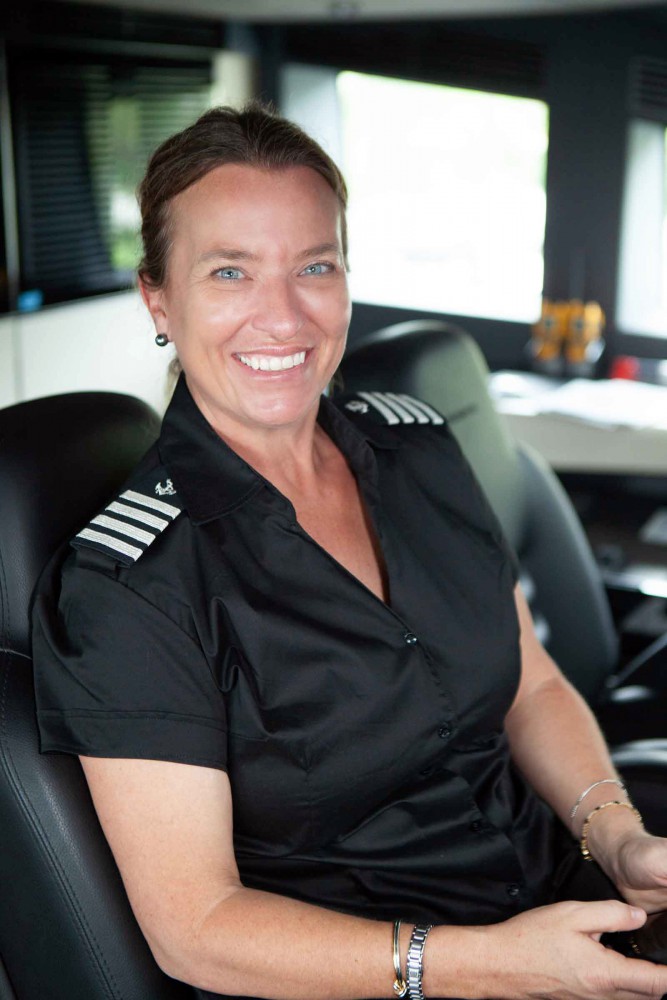
There is growing recognition that “crew culture” is not harmless if it normalises excessive drinking, sexualised banter, exclusionary behaviour or retaliation against those who speak up.
Captain Kelly Gordon
To its credit, parts of the industry have begun to respond. More yachts now have formal anti-harassment policies, clearer HR reporting structures, welfare contacts and structured crew induction processes. Some management companies have introduced behavioural and leadership training. Some captains actively set expectations around professionalism, boundaries and respect from day one. There is also growing recognition that “crew culture” is not harmless if it normalises excessive drinking, sexualised banter, exclusionary behaviour or retaliation against those who speak up. That is progress, but there is still a long way to go.
The structural conditions that allow abuse to go unchallenged still exist. Yachting is an enclosed working environment where crew live and where they work, often in shared cabins, with limited privacy and long, unpredictable hours. The chain of command is rigid and access to future employment is heavily influenced by references and reputation. In such a system, informal consequences matter as much as formal ones.
A junior stewardess may still be warned that making a complaint could “ruin her career”. A deckhand may be advised to stay quiet until the season ends. And even where formal blacklisting does not exist, the reality is that word travels quickly through a tightly connected industry.
That creates constant concerns for crew, male and female, before speaking up: Is this serious enough
to risk my job? Will I be believed? Is this person friends with others above me? Will I be labelled difficult or unprofessional? Will this follow me into my next contract?
Perhaps most importantly, we need to say that reporting harm is not disloyalty to the industry; it is one of the few mechanisms that can actually improve it.
Another issue that has not shifted enough is the way harassment is still too often minimised or reframed as interpersonal conflict rather than a safety issue. If a crewmember is being cornered, touched without consent, sexually pressured, intimidated, stalked, humiliated or punished for setting boundaries, that is not “crew drama”. It is not a misunderstanding, it’s a workplace safety failure.
And yet for women in particularly, the burden still often falls to them to manage the risk themselves: Watch your drink. Don’t walk alone. Don’t be too friendly. Don’t speak up too soon. Don’t upset senior crew. Don’t misinterpret signals. Don’t make it awkward. These are survival strategies, not structural solutions.
There is also still a persistent issue of role-based sexism. Interior departments, where women are heavily represented in yachting, are often expected to absorb emotional labour, maintain harmony and “keep things running smoothly”, even in the presence of inappropriate behaviour. This can blur professional boundaries and make misconduct easier to dismiss. Meanwhile, women on deck, in engineering or in leadership roles may still face credibility challenges, physical assumptions about capability or subtle exclusion from informal networks.
So the question becomes what needs to be said out loud for change to actually happen.
We need to say that prestige does not equal safety.
We need to say that luxury environments can conceal exploitation just as effectively as any other workplace, sometimes more effectively, because privacy, mobility and discretion are built into the model.
We need to say that being “like family on board” can become dangerous when it replaces accountability.
We need to say that leadership silence is not neutrality, it actively shapes culture.
We need to say that owners, management companies, recruiters and senior crew all influence what is tolerated, rewarded or ignored.
And perhaps most importantly, we need to say that reporting harm is not disloyalty to the industry; it is one of the few mechanisms that can actually improve it. In that context, several organisations and leadership initiatives are helping shift the conversation from awareness to action.
As I mentioned earlier, ISWAN’s Yacht Crew Help provides confidential, independent, 24/7 support for yacht crew dealing with a wide range of issues including harassment, bullying, abuse, mental health crises and employment concerns. Crucially, it sits outside the chain of command, which matters in an industry where reporting internally can feel unsafe or futile. It also collects anonymised data that helps expose patterns the industry has historically preferred not to see. That data consistently shows that abuse, bullying and harassment remain significant issues, with women disproportionately affected.
Alongside this, Yachtie Minds Matter has become an increasingly visible force for cultural change. Founded by me, it focuses on the intersection between mental health, safety and leadership culture on board. Its work includes providing access to therapy support, funding for mental health first aid training and industry-wide surveys that examine psychological safety, burnout, substance use and workplace wellbeing.
At the leadership level, change is also beginning to emerge through more open dialogue among captains themselves. Initiatives such as the Tuesday Captain’s Chat, led by Captains Liam Devlin and Scott Kidd, are helping normalise conversations that have historically been avoided in senior leadership spaces. These discussions focus on crew welfare, leadership responsibility, mental health, burnout, workplace culture and the human side of command, topics that are often left out of formal maritime training despite being central to life on board.
Culture is shaped by what leaders say, what they tolerate and what they respond to in real time. When captains openly discuss harassment, burnout, mental health and crew welfare, it changes what feels acceptable to ignore.
What makes this genuinely significant is the visibility of senior leaders speaking about them openly. In an industry where authority has traditionally been associated with emotional distance and silence, these conversations signal that leadership is not only about operational control but about culture-setting, psychological safety and accountability.
That actually matters for women on board. Culture is shaped by what leaders say, what they tolerate and what they respond to in real time. When captains openly discuss harassment, burnout, mental health and crew welfare, it changes what feels acceptable to ignore.
So when we talk about what needs to be said out loud, we are not just talking about crew behaviour, but we are also talking about leadership behaviour. We need leaders who are adamant that mental health and safety are inseparable and that “good crew culture” is not measured by endurance or compliance, but by trust, accountability and intervention when something is wrong.
The future of yachting will not be defined by how advanced the vessels are, how exclusive the guest experience becomes or how polished the industry appears from the outside, it will be defined by whether the people who keep it running, especially women, junior crew and marginalised workers, can live and work on board without fear of humiliation, coercion, retaliation or dismissal when they report harm.
The industry doesn’t need more awareness campaigns if awareness does not lead to consequences. We need leadership that acts, not just listens, reporting systems that are trusted, not performative, captains who intervene early and owners who understand that crew wellbeing is a top priority. Our voices are loud, especially when we use them together. Let’s change what has been tolerated for far too long.
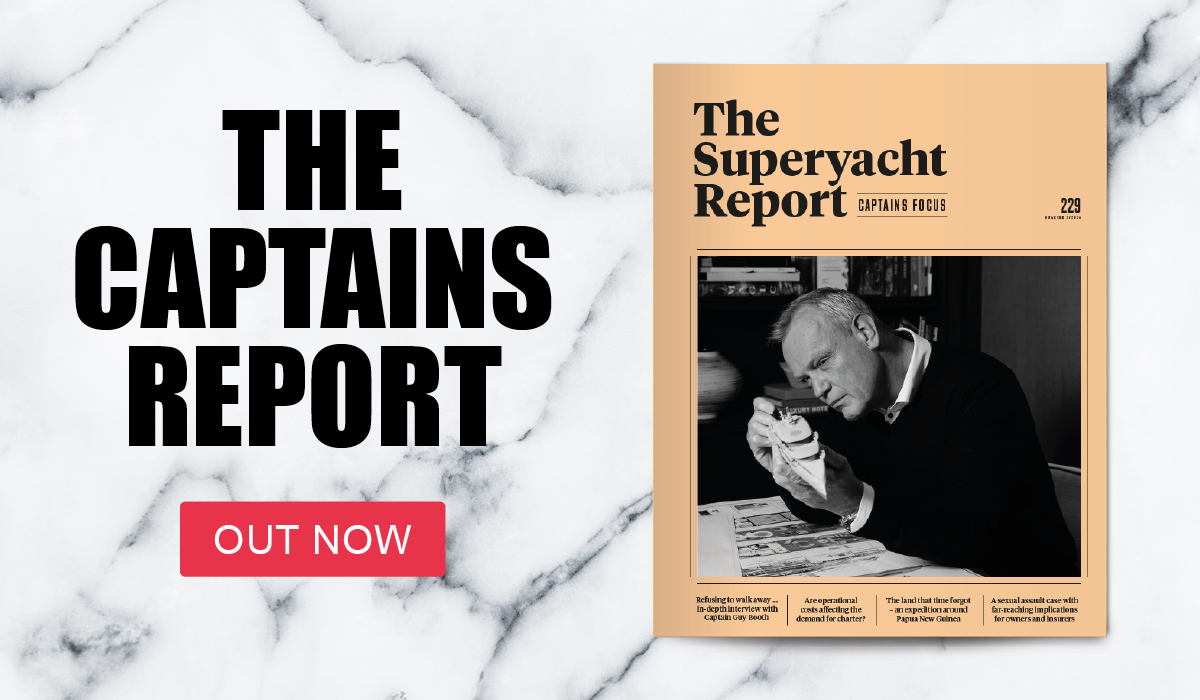
This article first appeared in The Superyacht Report: Captains Focus. With our open-source policy, it is available to all by following this link, so read and download the latest issue and any of our previous issues in our library.
NEW: Sign up for SuperyachtNewsweek!
Get the latest weekly news, in-depth reports, intelligence, and strategic insights, delivered directly from The Superyacht Group's editors and market analysts.
Stay at the forefront of the superyacht industry with SuperyachtNewsweek
Click here to become part of The Superyacht Group community, and join us in our mission to make this industry accessible to all, and prosperous for the long-term. We are offering access to the superyacht industry’s most comprehensive and longstanding archive of business-critical information, as well as a comprehensive, real-time superyacht fleet database, for just £10 per month, because we are One Industry with One Mission. Sign up here.
Related news
The Superyacht Report 229: Captains Focus - Out Now
513 whales in a day, a yacht arrested by US Marshals, Guy Booth on refusing to abandon Phi and so much more in TSR 229
Crew
Future directions for crew-safety risk mitigation
A critical evaluation of Captain Rod Hatch’s article, “The professional yachting world – some inconvenient truths”...
Opinion

Burst the bubble of hierarchical structure
Why a regulatory system that functions only in the wake of disasters is not a resilient one – by Dr Emma Gillett DC, CEO & Founder of SeaFeedback
Opinion
CHIRP Report: Pilot welfare when boarding
A case where the dismissive attitude toward the pilot’s safety reflects a poor on-board safety culture
Crew
Related news
The Superyacht Report 229: Captains Focus - Out Now
4 months ago
Future directions for crew-safety risk mitigation
10 months ago
Burst the bubble of hierarchical structure
11 months ago
CHIRP Report: Pilot welfare when boarding
11 months ago
NEW: Sign up for
SuperyachtNewsweek!
Get the latest weekly news, in-depth reports, intelligence, and strategic insights, delivered directly from The Superyacht Group's editors and market analysts.
Stay at the forefront of the superyacht industry with SuperyachtNewsweek