
Looking beneath the surface
Captains of the paint industry reveal the role technology plays – and will play in the future – in increasing efficiencies…
The fifth part of News Editor Conor Feasey’s report on the future of coatings in the refit sector, from issue 227 of The Superyacht Report: Refit Focus.
Paint is where expectations, regulation and practical reality collide most visibly. The pressures aren’t due to a single change – skilled labour has become harder to secure and more expensive, particularly at the level required for large, high-profile yachts. At the same time, finish expectations have continued to rise, with darker hull colours and “near-new-build standards” now commonplace, even though refit conditions remain defined by existing substrates, access constraints and fixed schedules.
Environmental regulation has added another layer, with a variety of requirements now shaping how paint projects are planned and executed. While generally accepted as manageable, their consequences become painfully apparent when outcomes are rejected: repeated sanding, extensive shrink-wrapping and weeks added to already complex refit timelines. Paint also rarely operates in isolation.
Taken together, these factors help explain why paint has become such a sensitive part of the refit equation. And how those pressures translate into day-to-day delivery is best understood through the captains of industry managing refits in practice.
The interviews describe a refit market that has become far less forgiving. Labour availability emerges as the primary constraint and heads of industry consistently point to shortages of skilled painters, supervisors and inspectors as the most notable driver of cost and delay.
Of course, environmental regulation is widely accepted as a necessary part of the landscape, but it also carries practical consequences. Naturally, we look to technology, but it cannot compensate for poor preparation or unrealistic expectations.
Paint in the refit sector remains a technically mature and well-understood discipline but the margin for error is wafer-thin. More paint moving through established cycles means more labour tied up for longer and more projects whose outcomes are less tolerant of delay, which will have ripple effects across the market. That’s not to say the market can’t and won’t adapt, but it’s the canary in the coal mine indicating it should.
Below are their responses to the fourth of five questions posed to them by Conor Feasey. Their responses to the remaining question will be published over the coming days.
What role will technology play in improving efficiency? Are we already seeing a measurable impact in real project outcomes?

Stefan Coronel, General Manager Huisfit, Royal Huisman
Technology will often have a purpose in increasing efficiency. For example, advanced climate control and extraction systems help create optimal working conditions, ensuring that all disciplines can carry out their tasks without disruption. These technologies contribute to a comfortable, safe and efficient environment, allowing work processes to run smoothly and productivity to remain consistently high.

Gianni Paladino, Commercial Director, Lusben
Technology is already a central driver of efficiency and Artificial Intelligence is currently at the heart of this transformation. AI is streamlining the way we prepare quotations, plan activities and manage projects, and in these areas the impact on efficiency is measurable today.
On the operational side, technology is improving how work is carried out on the ground. Faster and more capable transport equipment, innovative scaffolding systems, upgraded quay services and digital solutions for monitoring energy consumption are all contributing to smoother, more precise operations. A concrete example is the centralised water-treatment system we recently implemented in Livorno, part of a broader effort to bring cutting-edge infrastructure into the refit environment.
AI is streamlining the way we prepare quotations, plan activities and manage projects, and in these areas the impact on efficiency is measurable today.

Alberto Perrone Da Zara, Director Sales Yacht Refit , Lürssen
Technology only works when common sense is behind it. We are increasingly moving toward clear coating, similar to what is common in the automotive industry. The chemical components are the same as paint, but without pigment. Clear coating allows polishing, which is something you cannot do with traditional paint. Once you polish the paint, its life is finished.
At the same time, clear coating introduces new challenges. It creates a lens effect. If there is an imperfection underneath, you actually see it more. We see the same problem on board. Systems become so complicated that owners need to call someone to their cabin just to start a movie. Complexity for its own sake does not improve what it means to let down your hair and be on a yacht.

Manuel Di Tillio, Technical & Sales Director, Amico & Co
Technology has historically always improved efficiency and will keep doing so; from a technical point of view, this process is obvious. One important new challenge for the human being part of the efficiency will be the relationship with Artificial Intelligence; AI combined with software is the route for an efficient planned and managed future refit approach.

Kay Wrede, CEO and Creative Head, Wrede Consulting
Technology will play a supporting but not replacing role. We already see measurable benefits from:
• Digital inspection and reporting tools
• 3D scanning and surface analysis
• Improved spray equipment and process monitoring.
However, technology cannot compensate for insufficient preparation or lack of craftsmanship. The biggest gains come when technology is combined with experienced personnel and clear quality standards.
The biggest gains come when technology is combined with experienced
personnel and clear quality standards.
The interviews describe a refit market that has become far less forgiving. Labour availability emerges as the primary constraint and heads of industry consistently point to shortages of skilled painters, supervisors and inspectors as the most notable driver of cost and delay.
Of course, environmental regulation is widely accepted as a necessary part of the landscape, but it also carries practical consequences. Naturally, we look to technology, but it cannot compensate for poor preparation or unrealistic expectations.
Paint in the refit sector remains a technically mature and well-understood discipline but the margin for error is wafer-thin. More paint moving through established cycles means more labour tied up for longer and more projects whose outcomes are less tolerant of delay, which will have ripple effects across the market. That’s not to say the market can’t and won’t adapt, but it’s the canary in the coal mine indicating it should.
This article first appeared in The Superyacht Report: Refit Focus. With our open-source policy, it is available to all by following this link, so read and download the latest issue and any of our previous issues in our library.
Profile links
NEW: Sign up for SuperyachtNewsweek!
Get the latest weekly news, in-depth reports, intelligence, and strategic insights, delivered directly from The Superyacht Group's editors and market analysts.
Stay at the forefront of the superyacht industry with SuperyachtNewsweek
Click here to become part of The Superyacht Group community, and join us in our mission to make this industry accessible to all, and prosperous for the long-term. We are offering access to the superyacht industry’s most comprehensive and longstanding archive of business-critical information, as well as a comprehensive, real-time superyacht fleet database, for just £10 per month, because we are One Industry with One Mission. Sign up here.
Related news
Preparation is everything
Bob Wagemakers, naval architect and project director at Virtue Yacht Projects, on the value a project manager brings to the unique complexities of refit
Owner

The Superyacht Report 227: Refit Focus – out now!
From people and paint capacity, to project control and insurance, we asked the refit market what really matters to them. Read TSR: Refit Focus today…
Crew
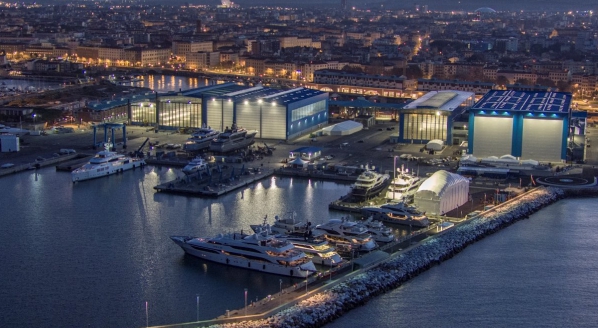
Benetti rolls out first AI integration project
The Italian shipbuilder will begin integrating AI tools across logistics, planning, production engineering and safety at its Livorno yard
Crew

Keeping up appearances
Rory Marshall, owner and director at Newmar Overseas, offers a captain’s guide to exterior surface maintenance
Crew

Will AI replace recruiters?
Chief technology officer and co-founder of recruitment platform yacht.ee Ivalo Pajumets on the future of yacht recruitment in the age of AI
Crew
Related news
Preparation is everything
9 months ago
The Superyacht Report 227: Refit Focus – out now!
9 months ago
Benetti rolls out first AI integration project
11 months ago
Keeping up appearances
1 year ago
Will AI replace recruiters?
1 year ago
NEW: Sign up for
SuperyachtNewsweek!
Get the latest weekly news, in-depth reports, intelligence, and strategic insights, delivered directly from The Superyacht Group's editors and market analysts.
Stay at the forefront of the superyacht industry with SuperyachtNewsweek