
2026 – The year Europe quietly rewrites the superyacht rulebook
From emissions accounting to AML duties and flag-state standards: what owners, managers and builders must treat as “live law” this season…
The European regulatory tide rarely arrives with breakers; it rises, inch by inch, until you look down and realise you’re standing in it. 2026 is that moment for the superyacht ecosystem. A trio of climate measures now bites in daily operations: the EU’s anti‑money‑laundering (AML) package hard‑codes expectations for high‑value yacht transactions, sustainability reporting has been sequenced rather than scrapped, and Malta – the EU’s pivotal yacht flag – enters its first full year under a revised Commercial Yacht Code. Dates and definitions matter – and they are now settled in black‑letter law.
“Winning programmes in 2026 make emissions data auditable, AML files boringly complete,
ESG requests painless and flag‑state expectations predictable.”
Carbon moves from slogan to spreadsheet
For the very largest yachts that operate commercially at or above 5,000gt and genuinely qualify as passenger ships, the emissions ledger changes in two ways. First, the EU Emissions Trading System (ETS) for maritime – phased in since 2024 – broadens the greenhouse gases it covers: alongside CO₂, methane (CH₄) and nitrous oxide (N₂O) are in scope from 1 January 2026, aligned with the EU’s monitoring, reporting and verification (MRV) regime. Geographically, operators surrender allowances for 100 per cent of emissions between EU ports and when at berth, and for 50 per cent of emissions on voyages touching a non‑EU port. In practice, that pushes multi‑gas monitoring plans and verifier‑grade datasets to the top of the bridge team’s agenda.
Why does this catch only a sliver of the fleet? Because scope is defined by ship type and tonnage calibrated for cargo and true passenger operations. The ETS applies to cargo and passenger ships ≥ 5,000gt (with offshore ships of the same size following in 2027). Yachts that deliberately cap guests at 12 to avoid passenger‑ship classification typically sit outside; those edging into passenger‑ship certification should not assume exemption. The compliance continuum now runs MRV → ETS surrender → contractual risk allocation.
FuelEU Maritime turns contracting into a compliance tool
Running in parallel, Regulation (EU) 2023/1805 (“FuelEU Maritime”) imposes a declining greenhouse‑gas intensity standard on the energy used on board ships > 5,000gt calling at EU ports – 2 per cent better than the 2020 baseline by 2025, tightening thereafter towards 2050 – with verification, credit banking/pooling and penalties written into the regulation. For the handful of superyachts that meet the scope tests, 2026 is the first full cycle where fuel documentation becomes a commercial lever: bunker procurement, RFNBO credits, pooling arrangements and off‑hire/penalty clauses now belong in the same conversation.
Money‑flows face a new normal
The EU’s 2024 AML package ended the patchwork. Regulation (EU) 2024/1624 (AMLR) sets a Union‑wide cash ceiling of €10,000 – which Member States may tighten – and brings a broader set of luxury‑goods dealings, including high‑value yachts, squarely into the AML perimeter. The package entered into force in July 2024 with application from 10 July 2027, giving brokers, refit yards, managers and family‑office SPVs the 2025-2026 window to rebuild KYC/KYB, source‑of‑funds/wealth documentation, escrow mechanics and sanctions screening. Supervision is centralised under the new Anti‑Money‑Laundering Authority (AMLA), established by Regulation (EU) 2024/1620 and headquartered in Frankfurt, operational since mid‑2025.
“Treat every high‑value transaction as an AML exam. Thin files invite delay at best –
and regulatory friction at worst.”
Reporting relief is not a free pass
Corporate sustainability reporting (CSRD/ESRS) has been sequenced and simplified, not abandoned. In 2025, the EU adopted a “quick‑fix” to lighten immediate ESRS burdens for early reporters and advanced a “stop‑the‑clock” track deferring obligations for later waves, yet banks and large counterparties will continue to push ESG data down the maritime supply chain. For yards, marina groups and equipment makers inside larger groups, 2026 should be treated as a housekeeping year: stabilise data pipelines (energy, scope 1-3, workforce, supply‑chain governance), revisit supplier‑data covenants in boilerplate and prepare for staggered due‑diligence duties as national laws implementing the Corporate Sustainability Due Diligence Directive (CSDDD) come online.
Flag logic: Malta’s Commercial Yacht Code 2025 beds in
Malta’s revised Commercial Yacht Code (CYC) 2025 took effect on 1 July 2025 and now governs commercial yachts (typically ≤ 12 passengers) through updated design, safety, manning and welfare standards. 2026 is the first full year where surveys, renewals and conversions must align with the new text and its transitional expectations. Anyone re‑flagging, refitting or changing commercial profile should sequence class work, manuals and manning plans against these milestones – not around them – and mirror flag‑state representations in charter party and insurance wordings.

What the C‑suite should actually do in Q1-Q2 2026
At the top end of tonnage, treat MRV + ETS + FuelEU as a single continuum: confirm passenger‑ship status and administering authority; upgrade monitoring plans to CO₂/CH₄/N₂O; and hard‑wire fuel documentation and risk allocation (bonuses/penalties, off‑hire) into charter and bunker contracts. For brokerage and refit actors, behave as though every high‑value transaction this year is an AML test: enforce the €10,000 cash ceiling, tighten UBO/PEP/sanctions controls and deliver “boringly complete” files at closing. For Malta‑flag operators, use scheduled surveys to align Code‑driven updates with MLC and SMS documentation.
Legal sources and references for back-up
EU ETS & MRV (shipping):
• Directive 2003/87/EC as amended by Directive (EU) 2023/959; Commission “Maritime in the EU ETS” FAQ (gases incl. CH₄/N₂O from 1 January 2026; scope and geography); Commission page “Reducing emissions from the shipping sector”.
• Regulation (EU) 2015/757 (MRV) and amending acts; Commission MRV FAQ and guidance (2024-2025), including expansion of covered ship types and verification rules.
FuelEU Maritime:
• Regulation (EU) 2023/1805 of 13 September 2023 on the use of renewable and low‑carbon fuels in maritime transport (OJ L 234, 13.9.2023), with implementing/secondary acts and Commission Q&A.
EU AML package:
• Regulation (EU) 2024/1624 (Anti‑Money‑Laundering Regulation) – Union‑wide €10,000 cash payment limit; application from 10 July 2027.
• Regulation (EU) 2024/1620 establishing the Anti‑Money‑Laundering Authority (AMLA) – seat Frankfurt; operational since 2025; associated Council/Commission press materials.
CSRD/ESRS & CSDDD:
• Commission decision and communications on ESRS “quick‑fix” (11 July 2025) and Council/Parliament documents on phased deferrals (“stop‑the‑clock”) adopted in 2025; ongoing Commission simplification track.
• Directive (EU) 2024/1760 (Corporate Sustainability Due Diligence Directive): transposition deadline 26 July 2027; staggered application by company size and sector.
Malta flag – Commercial Yacht Code:
• Transport Malta, Commercial Yacht Code (CYC) 2025, effective 1 July 2025, replacing CYC 2020; Merchant Shipping Directorate MS Notices (incl. MS Notice 194) and registry circulars on transitional arrangements.
NEW: Sign up for SuperyachtNewsweek!
Get the latest weekly news, in-depth reports, intelligence, and strategic insights, delivered directly from The Superyacht Group's editors and market analysts.
Stay at the forefront of the superyacht industry with SuperyachtNewsweek
Click here to become part of The Superyacht Group community, and join us in our mission to make this industry accessible to all, and prosperous for the long-term. We are offering access to the superyacht industry’s most comprehensive and longstanding archive of business-critical information, as well as a comprehensive, real-time superyacht fleet database, for just £10 per month, because we are One Industry with One Mission. Sign up here.
Related news

The EU data act
A wake-up call looms for the superyacht sector – here Prof. Dr Christoph Ph. Schließmann sets out the facts
Opinion
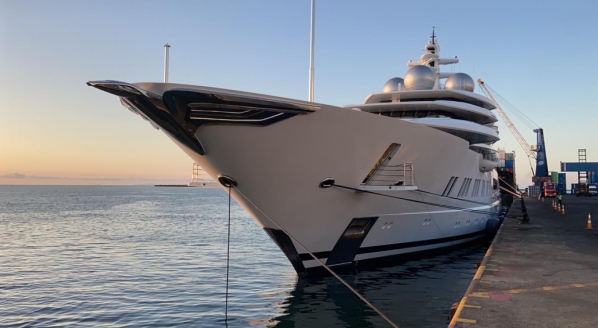
Sale of Amadea: a precedent that could shape Europe’s frozen yacht market
Seasoned superyacht auctioneer, Emmanuelle Votat dissects the challenges and opportunities emerging from the latest development in the sanctions saga
Opinion

Drawing the line between commercial and private use
Substance over weekends: private use inside commercial yacht structures is the EU-compliance frontier
Opinion

Fragmented EU customs rules leave yacht owners exposed
Conflicting EU customs rules risk massive VAT bills for superyachts. A recent case exposes why harmonised enforcement is urgently needed across member states
Business
Related news
The EU data act
12 months ago
NEW: Sign up for
SuperyachtNewsweek!
Get the latest weekly news, in-depth reports, intelligence, and strategic insights, delivered directly from The Superyacht Group's editors and market analysts.
Stay at the forefront of the superyacht industry with SuperyachtNewsweek