
CHIRP Report: Heads down vs heads up
A case where breakdown in Polar bridge management highlights the need for proper planning when navigating in ice conditions…
The following case study is from CHIRP Maritime’s Superyacht Feedback. It is the first superyacht-specific programme and publication dedicated to improving safety in the maritime industry through vital knowledge sharing, anonymous reporting, analysis and feedback via the Superyacht Maritime Advisory Board.
Initial report
The reporter describes a breakdown in bridge resource management (BRM) during navigation in Polar waters, highlighting the challenges of maintaining situational awareness in a dynamic ice environment.
An expedition vessel had completed daily operations and was proceeding towards open water through an area with 6–7/10 ice concentration, including glacial ice, bergy bits and icebergs (see definitions below).
The bridge team consisted of the Master, who was conning the vessel, and the Chief Officer, who was assisting with a navigational system combining vessel sensor inputs (including GPS and echo sounder data) to provide a real-time 3D representation of the seabed. The Officer of the Watch (OOW) also provided support. The OOW was on their first voyage in Polar waters, while the Master and Chief Officer had prior ice experience.
There was no dedicated lookout on the bridge, as the assigned lookout was on deck securing expedition workboats. As ice concentration increased, available leads and open water became more limited. The vessel was not following a pre-established passage plan, and no clear route or contingency plan had been agreed upon for the changing conditions. The Master manoeuvred the vessel while seeking input from the bridge team on the safest route.
Several icebergs along this track were not identified during assessment.
The Chief Officer primarily referred to an electronic track based on a previous vessel’s route and advocated following it. However, several icebergs along this track were not identified during the assessment.
The OOW relied more on visual observation to identify alternative routes through the ice, but their input was not fully incorporated into decision-making. The Master sought guidance from the team as conditions became more constrained.
The reporter considers that the situation reflects reduced situational awareness, reliance on electronic information and ineffective use of bridge team inputs during increasing workload in ice conditions.
Ice definitions
Iceberg – large floating piece of glacier ice
Bergy bit – smaller fragment of an iceberg or glacier
Growler – very small, low-lying ice fragment that is difficult to detect
Glacial – ice land-originating ice from glaciers
CHIRP comment
This report highlights the unique challenges of Polar operations, where rapidly changing ice conditions demand a combination of traditional seamanship, sound judgement and effective use of modern navigation tools.
The bridge team’s attention should never become overly focused on electronic displays or recorded data at the expense of maintaining an effective visual lookout.
Electronic navigation systems and previously recorded vessel tracks can provide valuable situational awareness, but they do not confirm that a route remains safe. Ice conditions, weather, visibility and glacial activity can change rapidly, making reliance on historical tracks a significant risk. Following another vessel’s track without independently assessing current conditions is not an acceptable navigational strategy and can create a false sense of security.
The bridge team’s attention should never become overly focused on electronic displays or recorded data at the expense of maintaining an effective visual lookout. In Polar waters, direct observation remains one of the most important safety defences. Not all hazards are detectable by radar; for example, small ice fragments such as growlers may present a serious collision risk while remaining undetected by electronic sensors. Equally, a vessel should never intentionally make contact with glacial ice, regardless of its size or apparent condition.
The report also reinforces the importance of effective bridge resource management (BRM). The bridge team must operate as an integrated safety barrier, ensuring that observations, concerns and alternative views are actively shared and considered, regardless of rank or experience. In this case, opportunities to strengthen that safety barrier appear to have been missed. The designated lookout was not continuously available on the bridge, reducing the vessel’s ability to detect hazards visually, while the Officer of the Watch, despite being best placed to observe the developing situation, was not actively consulted for their assessment. Experience levels may differ, but every member of the bridge team contributes to situational awareness, and encouraging challenge and discussion is fundamental to safe decision-making.
Effective passage planning is equally critical. Passage plans should identify alternative routes where intended tracks may become blocked or unsafe, and bridge teams should be prepared to reduce speed, reassess the situation and revise their plan whenever uncertainty increases. Commercial pressures, particularly in the expedition sector, where operational resources and scheduling flexibility may be more limited than on larger passenger vessels, must never influence decisions affecting navigational safety.
Safe Polar navigation depends on combining technology, professional experience, continuous observation and open communication. None of these elements is sufficient in isolation.
The Maritime Advisory Board also noted that while the master and chief officer often hold advanced ice navigation qualifications, other bridge team members may possess only the minimum level of Polar training. Furthermore, there is little formal training or guidance specifically addressing the role of lookouts in Polar operations. Given the critical contribution that vigilant visual observation makes to safe ice navigation, this is an area where the industry should consider developing more structured guidance and training.
Safe Polar navigation depends on combining technology, professional experience, continuous observation and open communication. None of these elements is sufficient in isolation; together they provide the resilience needed to ensure that decisions are based on a complete and current understanding of the operating environment rather than on a single source of information.
Key issues relating to this report
Factors relating to this report
Communication – The bridge team did not effectively exchange concerns, particularly the OOW’s visual observations of the ice conditions. Information was available but not fully shared or acted upon.
Over-confidence – Reliance on a previous vessel’s track as a “proven” route may have reduced the level of challenge and independent assessment required in a changing ice environment.
Lack of teamwork – The bridge team did not fully combine their different sources of information, experience and perspectives to build a shared mental model.
Pressure – Increasing ice concentration, restricted manoeuvring space and the desire to make progress increased pressure on the decision-making process. The increasing workload and uncertainty created a more pressured bridge environment, affecting communication and decision-making.
Distraction – Attention became focused on electronic information and tracking, reducing attention to the developing external environment.
Consideration should also be given to how bridge teams are trained to manage authority gradients where differences in rank, experience or confidence may affect the sharing of safety-critical information.
Key takeaways
Regulators – “Polar operations require bridge resource management standards that recognise the unique challenges of dynamic ice environments.” Regulators should consider whether Polar training adequately addresses BRM in high-uncertainty environments. Guidance should ensure that operators have robust procedures for ice navigation, including contingency planning, defined decision point and clear escalation processes. Consideration should also be given to how bridge teams are trained to manage authority gradients where differences in rank, experience or confidence may affect the sharing of safety-critical information.
Managers/Operators – “Technology can enhance situational awareness, but it cannot replace teamwork, independent assessment, and effective challenge within the bridge team.” Managers should ensure that Polar passage planning includes clearly identified routes, alternatives and agreed decision points before entering areas where conditions may rapidly deteriorate. Operators should promote a culture where all bridge team members are encouraged and supported to challenge decisions, regardless of rank or experience. Electronic systems should be recognised as valuable decision-support tools, but bridge teams must remain aware of their limitations and continue to verify information through observation and professional judgement. Polar-specific BRM training should include realistic scenarios that reflect the pressures and uncertainties of ice navigation.
Seafarers – “In Polar waters, the safest route is built from many sources of information, not from one screen, one person or one previous track.” Seafarers should maintain a shared mental model by ensuring that everyone on the bridge understands the intended plan, the risks involved and the changing conditions. Concerns and observations should be communicated early, particularly when what is seen outside does not match what is expected from electronic information. Technology should support decision-making, not replace professional judgement. In challenging environments, maintaining a balance between heads-up visual awareness and heads-down system monitoring is essential.
To register to CHIRP or submit your feedback, please click here.
Profile links
NEW: Sign up for SuperyachtNewsweek!
Get the latest weekly news, in-depth reports, intelligence, and strategic insights, delivered directly from The Superyacht Group's editors and market analysts.
Stay at the forefront of the superyacht industry with SuperyachtNewsweek
Click here to become part of The Superyacht Group community, and join us in our mission to make this industry accessible to all, and prosperous for the long-term. We are offering access to the superyacht industry’s most comprehensive and longstanding archive of business-critical information, as well as a comprehensive, real-time superyacht fleet database, for just £10 per month, because we are One Industry with One Mission. Sign up here.
Related news
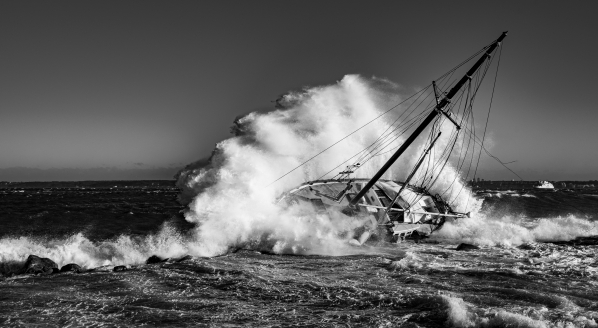
Weather windows and El Nino
With extreme weather hitting some hotspots across typical charter hubs, has the time has come to review our peak season and extend cruising patterns?
Owner
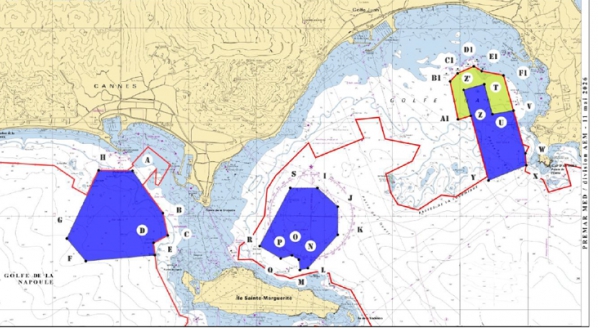
Pampelonne Bay anchoring rules redrawn
French charts are lagging behind a new order that sees the 45 to 80-metre western anchoring area reclassified and a change in authorities
Crew
New anchoring guide highlights growing compliance risk for captains
Swiss Ocean Tech’s country-by-country breakdown of anchoring rules across the Med shows growing complications of anchoring in various jurisdictions
Crew

Destination unknown
Gayle Patterson, director of yachting at Pelorus Yachting, discusses humpback whales, shark tagging in the Galapagos and where experiential charter demand is he
Owner
Related news
Weather windows and El Nino
3 weeks ago
Pampelonne Bay anchoring rules redrawn
2 months ago
Midnight amongst the ice
3 months ago
Destination unknown
3 months ago
NEW: Sign up for
SuperyachtNewsweek!
Get the latest weekly news, in-depth reports, intelligence, and strategic insights, delivered directly from The Superyacht Group's editors and market analysts.
Stay at the forefront of the superyacht industry with SuperyachtNewsweek