
How far can batteries take you?
Battery-based energy architecture is no longer a technology of the future and it’s proving to be not just an alternative, but a better proposition…
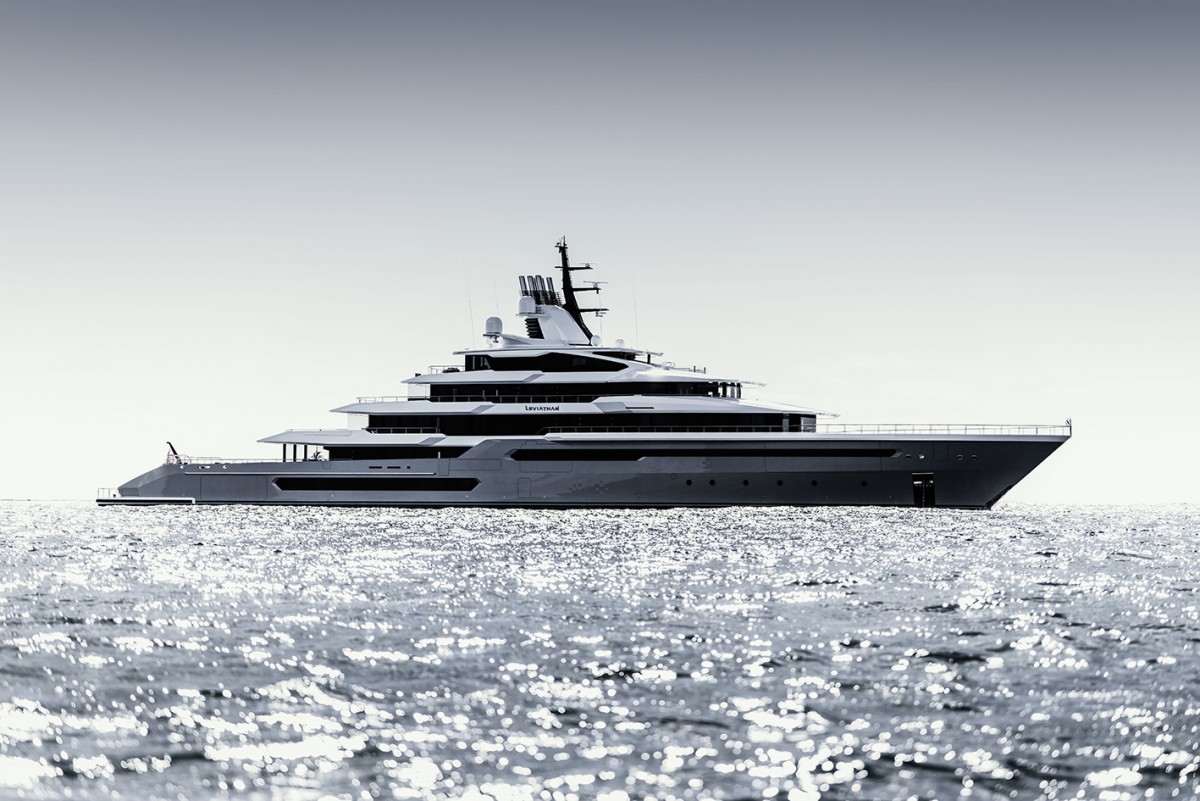
M/Y Leviathan, launched by Oceanco in 2025, has access to a 5.5MWh battery system that allows it prolonged silent, emission-free operation
Across successive yacht projects, Lateral Naval Architects has been progressively changing the relationship between a yacht, its stored electrical energy and its generating plant. This week at the Monaco Yacht Show, they will reveal what happens when that progression is taken to its next logical step.
Their journey through electrification has been one of real-world application and deep investigative theory, each informing the other. It began with diesel-electric hybrid systems in S/Y Black Pearl and M/Y Bravo Eugenia, evolved through the Inception platform and the company’s HISWA technical paper on the future of battery energy storage in large-yacht system architecture, and was further developed through M/Y Leviathan and the Kairos concept, in which batteries assume a much greater role in the vessel's operation. Electrification has never been about a single concept or technology.
Rather than beginning with a technology and asking where it might be applied, Lateral began with the way yachts are actually used, analysing real-world Mediterranean charter activity and translating it into propulsion and hotel energy demand, leading to the critical question:
How far can the progression towards electrification realistically be taken while retaining the freedom, capability and experience expected of a yacht?
Lower running and maintenance costs, a quieter user experience and the convenience of charging
at home are powerful advantages today
Battery-based energy architecture is no longer a technology of the future – it is already all around us. From the smartphones in our pockets and the laptops on our desks to e-bikes, cars, buses and other demanding forms of transport, batteries have become an integral part of everyday life. The reason is simple – battery technology is increasingly proving to be not just an alternative, but a better proposition.
Lower running and maintenance costs, a quieter user experience and the convenience of charging at home are powerful advantages today, and they are likely to become more compelling as energy density improves and battery costs continue to fall. Across much of the transport sector, the direction of travel is clear.
The superyacht sector has already embraced battery technology, with installations ranging from 0.5 to 5 MWh used to reduce the generator package through peak shaving, improve operational efficiency and create genuine emission-free periods on board. The wider marine industry has moved further. Today, 1,548 vessels have batteries integrated, with another 388 on order, and more than 2,148MWh of battery capacity represented across the fleet. Electric ferries are already working demanding routes every day; workboats and short-sea vessels are following. Larger projects are pushing battery power into applications that would have been dismissed as unviable a decade ago, including a 145-metre electric cruise ship with capacity for 500 passengers and an installed battery capacity of 73MWh, designed to operate zero-emission along the entire coast of Norway. Large battery power is becoming commercially advantageous across an increasing number of marine segments.
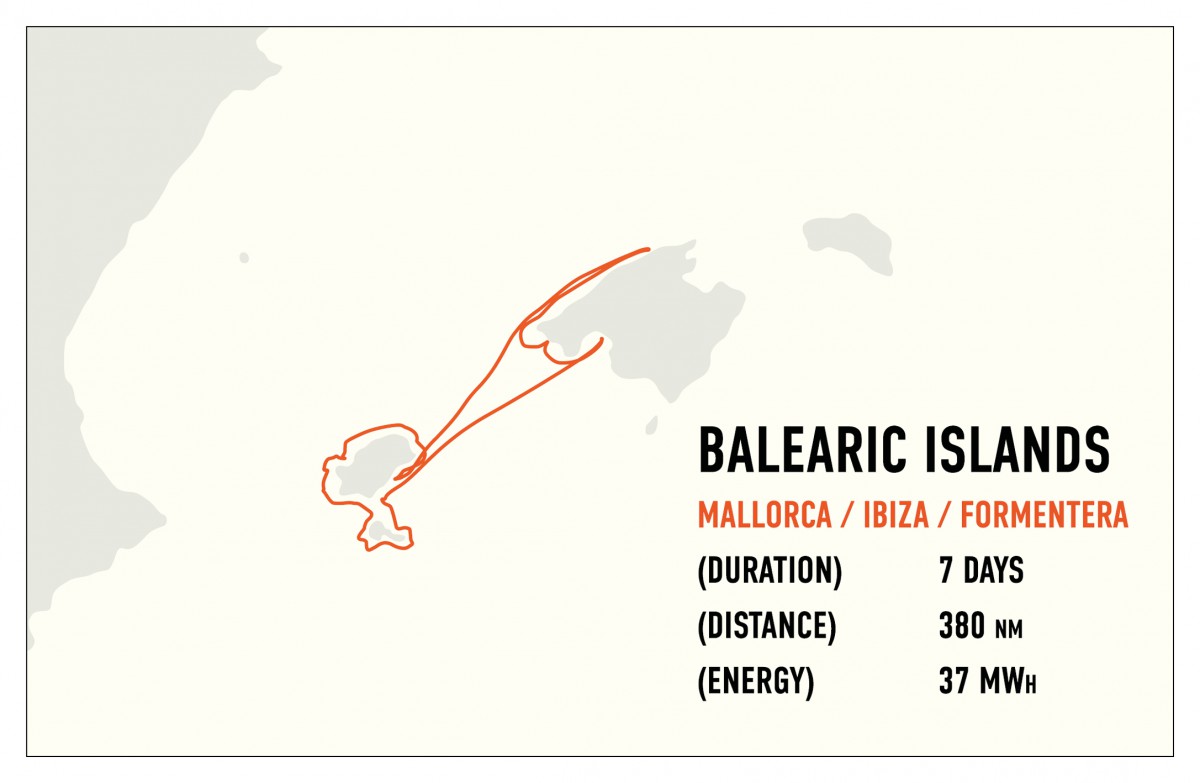
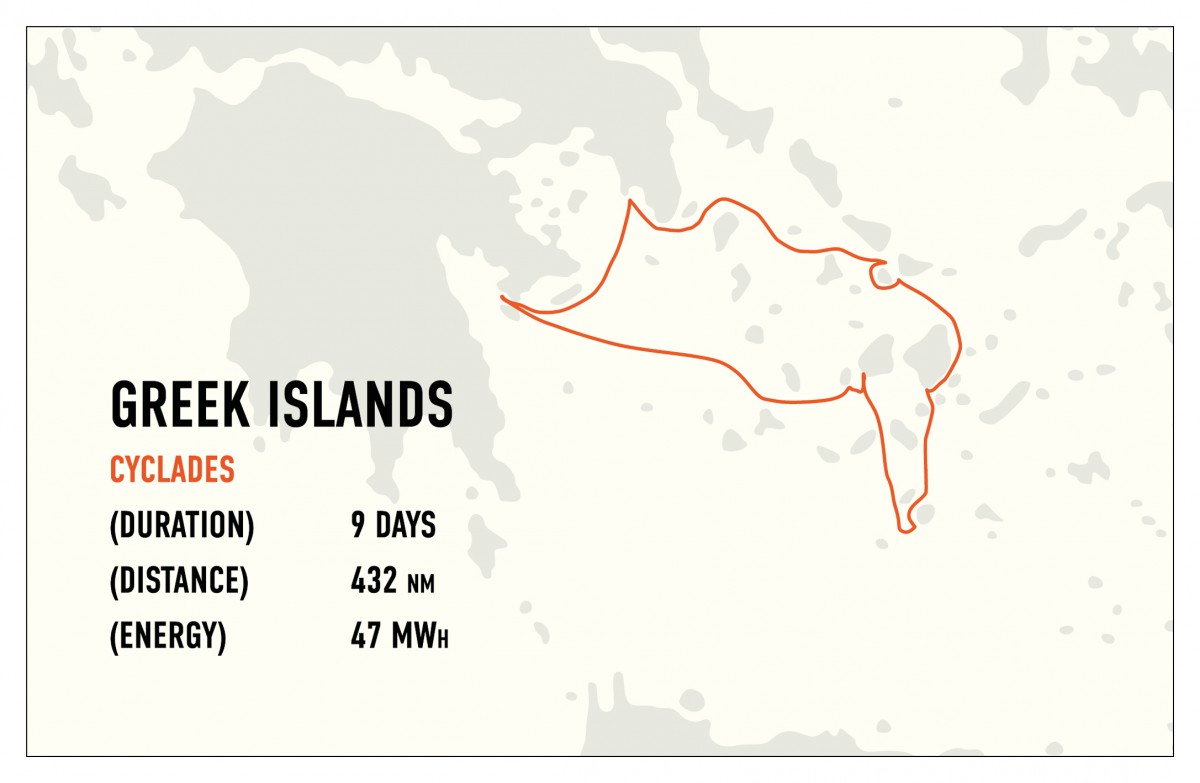
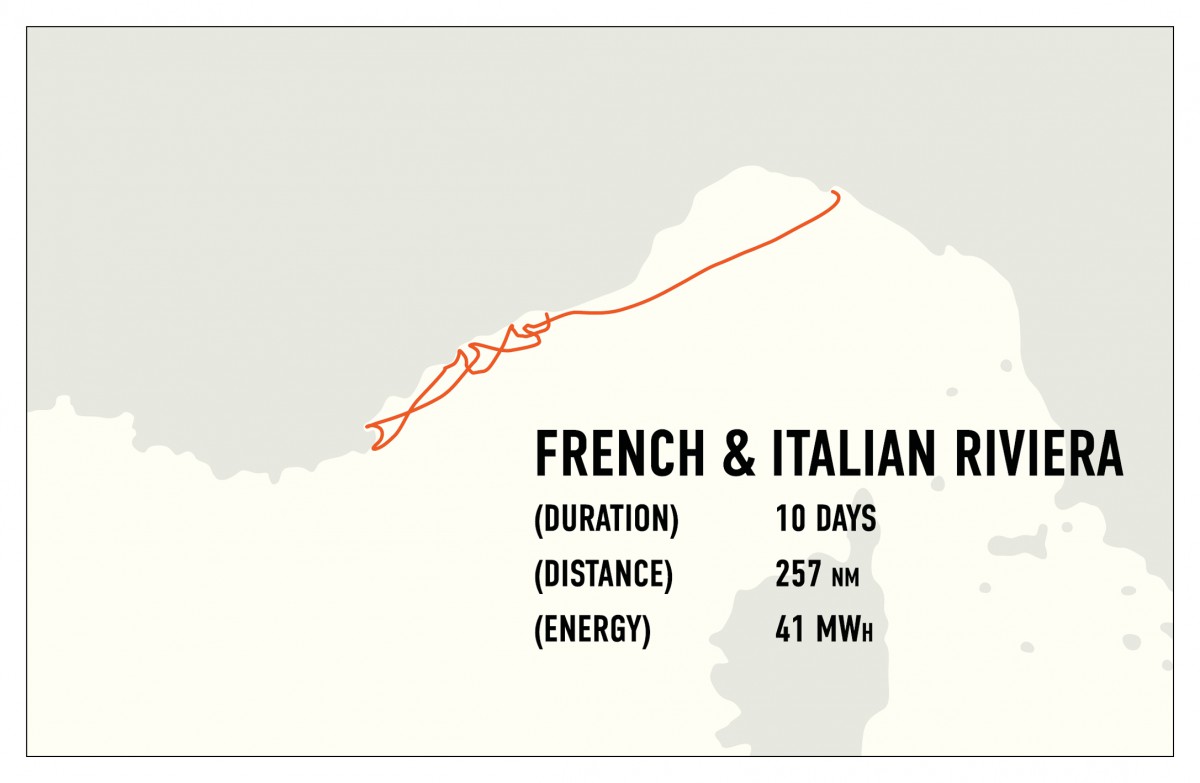
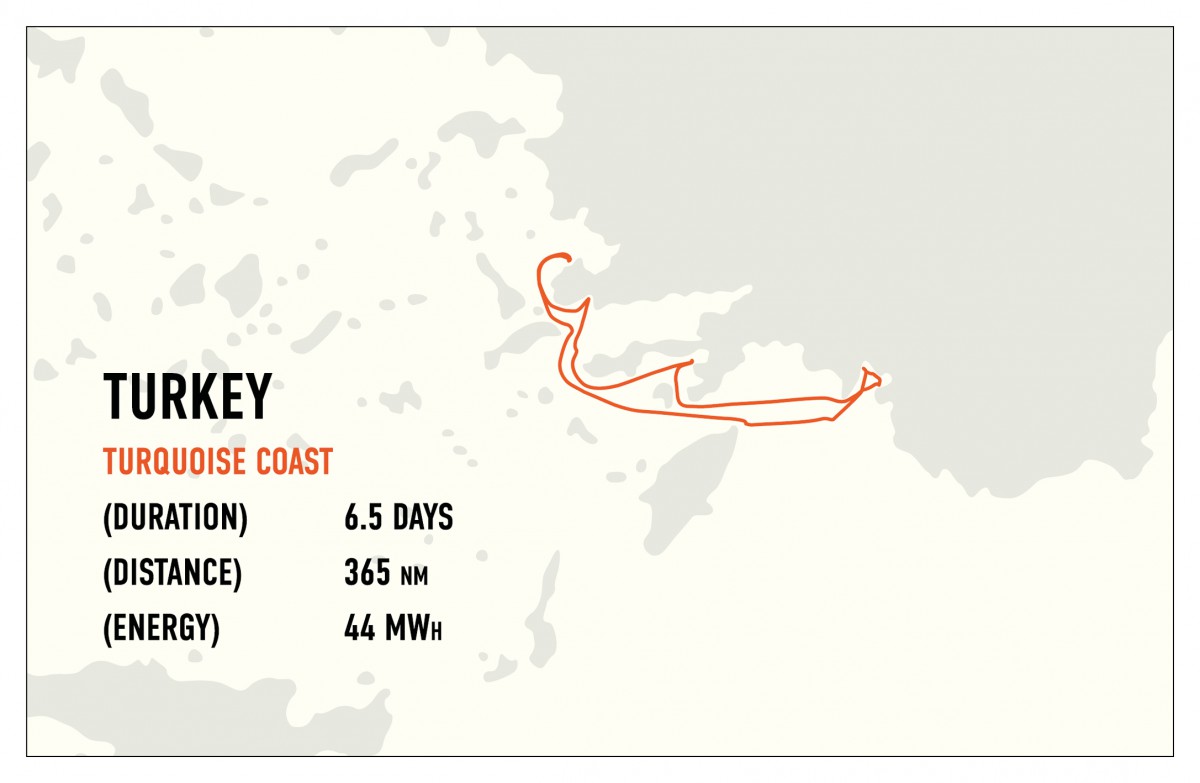
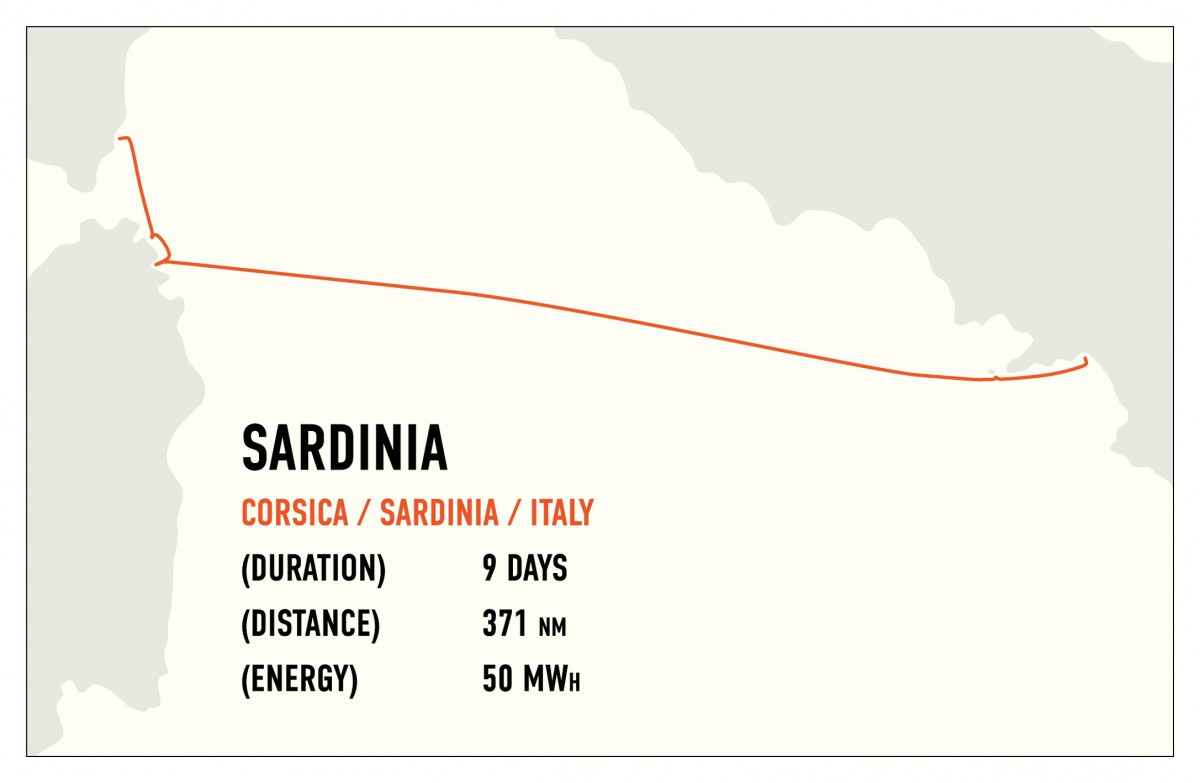
During their analysis of yachts operating around the Mediterranean, Lateral identified five representative routes,
all possible within an energy demand of 50MWh
Battery capacity cannot simply be added to an existing yacht as mass affects displacement and stability, volume competes with machinery, crew and guest spaces, and increased energy demand places greater importance on hydrodynamic and hotel-load efficiency.
Unlike many forms of transport already transitioning towards battery-electric operation, a yacht does not follow a timetable or repeatedly travel between two known points. Its operating profile is inherently unpredictable as routes change and time underway varies. Days may be spent at anchor, while destinations and charging opportunities cannot necessarily be known in advance. The specification convention compounds the difficulty. Superyachts above 50 metres are typically specified with 4,000 to 5,000 nautical miles of range, or more where owners want the remotest destinations. That figure exists to cross the Atlantic with reserve and to bunker where availability, quality and price are best. Operational profiles indicate that this requirement is often only utilised twice a year. So the engineering challenge becomes considerably more interesting than simply installing more batteries.
Battery capacity cannot simply be added to an existing yacht as mass affects displacement and stability, volume competes with machinery, crew and guest spaces, and increased energy demand places greater importance on hydrodynamic and hotel-load efficiency. Large-scale energy storage introduces new requirements for compartmentation, cooling, fire protection, ventilation and redundancy.
Chemistry is not settled either. The marine market has traditionally used NMC cells, and many of today’s most energy-dense marine batteries use that technology. It is being challenged by cheaper LFP chemistries, which on paper offer lower energy density but are well suited to the deep discharges and low discharge rates typical of yacht projects. The optimum assessment differs by project.
Charging introduces questions not only of infrastructure availability, but of where the electricity comes from, and therefore the real carbon consequence of operating electrically. Onshore power supply infrastructure across the Mediterranean is accelerating in response to European decarbonisation measures including Fit for 55, AFIR and FuelEU Maritime, with major ports investing in multi-megawatt capability.
There is also the matter of where a vessel is permitted to go. Emissions regulation has governed how a vessel operates and it is beginning to govern where it can go. The mechanism matters more than any single location: access determined by what a vessel emits on arrival. Once established, it is available to any authority with a coastline it chooses to regulate. None of these is solved by installing more batteries. Each has to be engineered, and each answer changes the vessel around it. Lateral has spent the last year working through them and after Monaco, we will be working with Lateral to bring the answers and more details, as we believe this is a highly intelligent and logical step forward, based on the typical operational profile of today’s fleet.
Profile links
NEW: Sign up for SuperyachtNewsweek!
Get the latest weekly news, in-depth reports, intelligence, and strategic insights, delivered directly from The Superyacht Group's editors and market analysts.
Stay at the forefront of the superyacht industry with SuperyachtNewsweek
Click here to become part of The Superyacht Group community, and join us in our mission to make this industry accessible to all, and prosperous for the long-term. We are offering access to the superyacht industry’s most comprehensive and longstanding archive of business-critical information, as well as a comprehensive, real-time superyacht fleet database, for just £10 per month, because we are One Industry with One Mission. Sign up here.
Related news

Yacht sector must prepare for potential expansion of EU ETS
Proposed EU ETS changes could extend carbon pricing to yachts from 400gt, increasing the focus on emissions performance and energy efficiency sector-wide
Crew
The unexpected upside of rising fuel costs for luxury yacht charters
Gayle Patterson, Director of Yachting at Pelorus, reveals how rising fuel costs are changing all-inclusive charters and accelerating more efficient yacht design
Owner
.jpg)
Sailing Yacht Zero readies for sea trials
The 69-metre Vitters-built ketch, designed to cruise purely on harvested renewable energy, has launched in Harlingen after seven years of development
Fleet
Sanlorenzo partners with BYD Energy Storage in battery tech push
The La Spezia-based shipyard is deepening ties to advanced battery and energy storage technology firms on its “Road to 2030”
Business

A new chapter for Water Revolution Foundation – and for our industry
Setting out a vision for raising the standards of environmental performance with clear metrics, credible standards and alignment across all stakeholders
Opinion
Related news
Sailing Yacht Zero readies for sea trials
3 months ago
NEW: Sign up for
SuperyachtNewsweek!
Get the latest weekly news, in-depth reports, intelligence, and strategic insights, delivered directly from The Superyacht Group's editors and market analysts.
Stay at the forefront of the superyacht industry with SuperyachtNewsweek