The perfect ratio of work, family and loyalty
The impounding of Phi is only part of the story. Captain Guy Booth on family, values, Indian epiphanies and the cost of refusing to walk away…
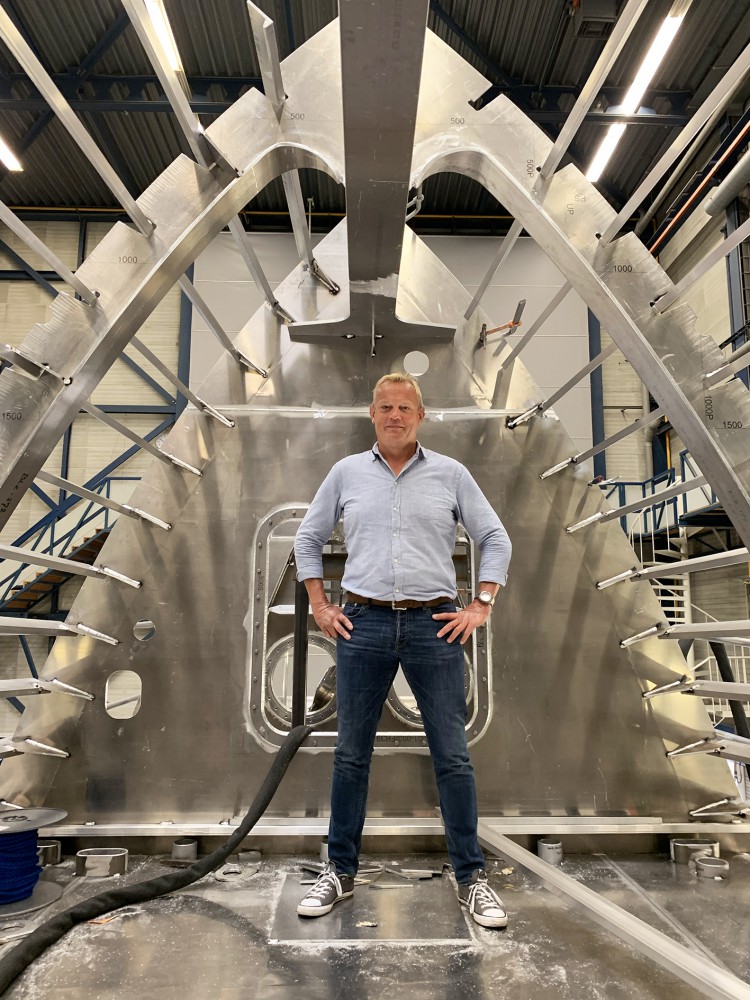
“Turn the VHF radio on in the bridge and the crew mess on VHF channel 13, please. And turn the volume up high in case the port calls you. All right, thanks, buddy. Ciao.” As Captain Guy Booth puts down his phone to resume our video call, the pleasantries we had exchanged but minutes earlier subtly fade. He apologises, explaining there had been a shorepower issue, but the subtext weighs heavily as I ask him how he has been. It has been almost a year since we last spoke, following the Supreme Court ruling against Phi’s appeal.
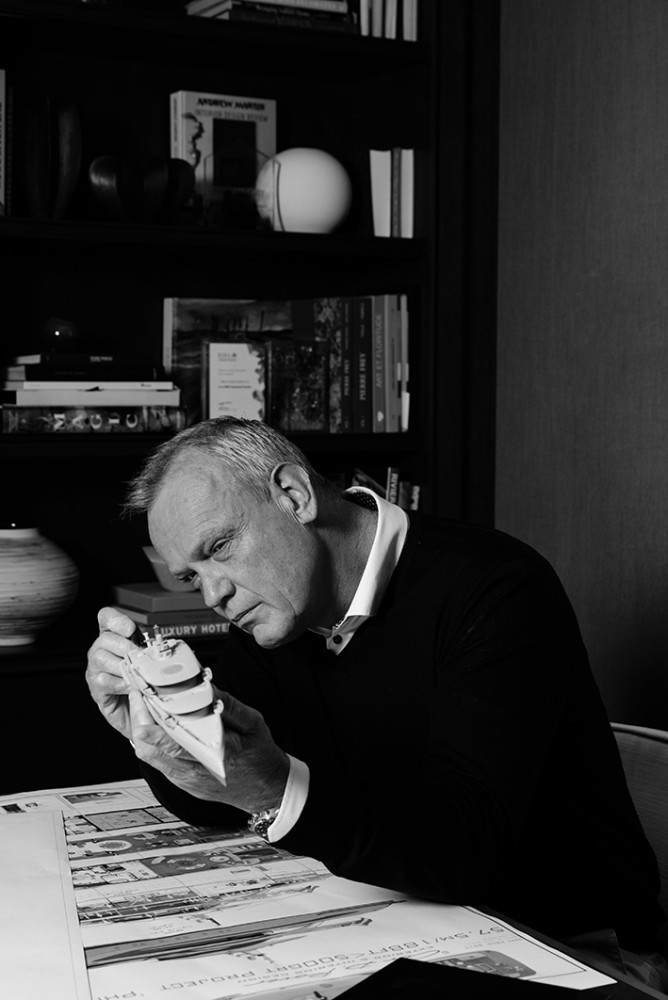
“Me, personally? Yeah, mate, a bit shit, really,” he says. “I'll let you edit that.” (I don’t.) What he describes is a tedious, Groundhog-Day delirium that has constricted his existence for the past four years – a monotonous struggle he has endured and one that’s taken its toll. But as he sits in his home office on the English south coast, Booth still cuts the figure of “a lifer” through and through. A seasoned mariner, over three decades in yachting, a wall of awards and the unmistakable bearing of a man who has spent more of his life on water than off it. Except he isn’t at sea and hasn’t been for some time.
“I've done 31 years in yachting on some spectacular boats, even won several awards. Four years ago, I was the keynote speaker at every conference going and now there’s not much in my inbox. I should be enjoying the fruits of 40-plus years of being on the water. I should be in the sun, going to exotic locations, running a beautiful yacht, Phi or another, all around the world. And, you know, doing the commute up to London on the M23 and the M25, sitting on a boat with a skeleton crew doing basic maintenance ...”
Despite Naumenko not being sanctioned by any state nor proven to have any political influence, they have nonetheless watched the flagship of his fleet sit idle by the Thames for four years, the subject of a detention order that has long outlasted the minister who issued it.
He stops and takes a breath as he removes his glasses. “Look, I know that there are many people, especially middle-aged blokes, who are battling with real depression, genuine depression. So, I can’t really use that term in deference to them. But I have had some dark times where I've questioned my own worth, my own values, my motivation structure. I have battled. I've had all sorts of questions about this. I went through a period of not being terribly motivated to get up in the morning. Phi was, is, 16 years of my life. There are four years of the build, two and a half years of the project development and then probably a decade of working closely with the owner. My entire career, I kept saying to my wife that all I wanted to find was a genuine, human owner. Someone smart and respectful of the crew and the team. A visionary who wants to build a genuinely new boat. That’s my apex, right? Especially a Royal Huisman.”
There is an inescapable synonymity in the collective memory of Booth, Phi and its owner, Sergei Naumenko. Behind the scenes, the pair had spent over a decade poring over boat designs, learning and growing together, their lives becoming increasingly intertwined as their kids grew and families became both friends and project partners (Lynette, Booth’s wife, heads HR and procurement for Phi). The endeavour is very much a family affair, personal and professional life blending into the perfect ratio. And despite Naumenko not being sanctioned by any state nor proven to have any political influence, they have nonetheless watched the flagship of his fleet sit idle by the Thames for four years, the subject of a detention order that has long outlasted the minister who issued it. It has brought Booth some dark moments.
So, why stay, I ask. Booth shrugs and replies, “The boss asked me the same thing”. The duo were talking over a glass of wine a few months ago when the bewildered owner questioned why Booth remained on an immobile vessel, likening the arrangement to clipping the wings of a pilot. The truth is it has required a monumental shift in Booth, but one he feels he’s achieved through changes in his lifestyle, thought processes and daily patterns to come out on top. But now, he says, he is ready for battle and has the ECHR in his crosshairs.
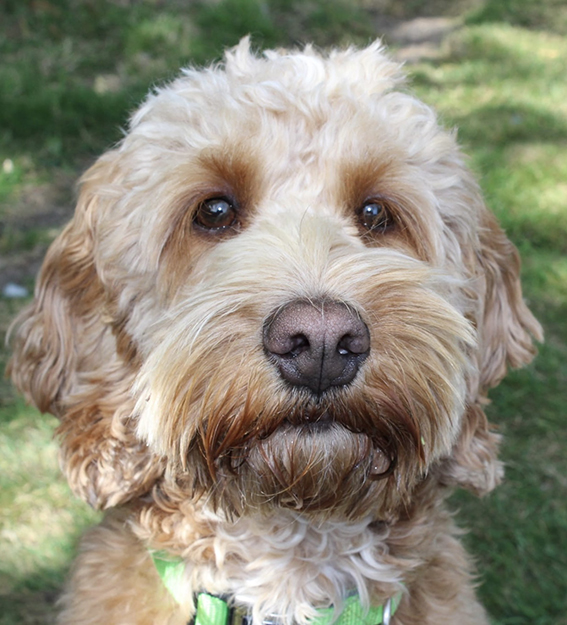
It was all a matter of “going back to basics.” He cut his seventy-hour work weeks in half, headed back to the gym and changed his diet. He started running on the South Downs every other day with his Cockapoo, Chewie (Chewbacca is his government name). He rediscovered his love for classic rock, acoustic blues and reggae on his vintage turntables and traded in the worn-out manuals for Sapiens, Bad Blood, the Asimov he had not picked up in decades and his son’s GCSE texts. “I wrote down all the reasons why I’m still here, what really matters to me – my family. That is what made me refocus,” he says. Booth’s “fantastic family life” is central to everything he does and his principles, he adds. “That is why I can't leave until this is concluded. For my own self-pride and even my father and the values that I was brought up with.” And those values are a good place to start.
Born in England, Booth emigrated to New Zealand with his parents and older sister in the mid-1970s, when his father, an RAF officer, transferred to the Royal New Zealand Air Force. He was, frankly, an annoyingly overachieving all-rounder growing up, playing piano and trumpet in orchestras and bands and setting national secondary school records at middle distance and in the pool, two disciplines that reward patience. He was very much “that guy”. Yet for all his insistence that this has been an accidental career, Booth was by then already a sailor.
Booth went back to school, took his engineer’s licence, spent a few years in the engine room and got his first captain’s job in 2002. “I’ve never looked back since. As I said, it has been an accidental career.”
Both his parents loved the water and the family spent every New Zealand winter in Fiji, Tonga or New Caledonia on a 50-footer. It was there that his father first taught him to use a sextant, aged 12, and where he would call to his mother saying he has just caught lunch, mask still on, after diving for crayfish for lunch. When his parents eventually retired, the pair planned a three-year circumnavigation. They sold both cars, rented the house out, flew to Newport, Rhode Island and bought a 46-foot ketch called Adastra at the Annapolis Boat Show. The couple returned to New Zealand from their three-year voyage nineteen years and three hip replacements later.
Booth went on to race on 40 and 50-footers at the local yacht club before being selected, in his university years, as part of a three-boat New Zealand race campaign. The salary was modest, but there was plenty of beer, rum and pizza, which in truth is all any student really needs to survive. “It was following a dream,” he recalls. “After a few years of that, I wound up in Antibes and picked up a few Atlantic crossings on big sailing boats and kept racing for years all around the Med, the Caribbean, the East Coast of the USA and back down to New Zealand and Australia.”
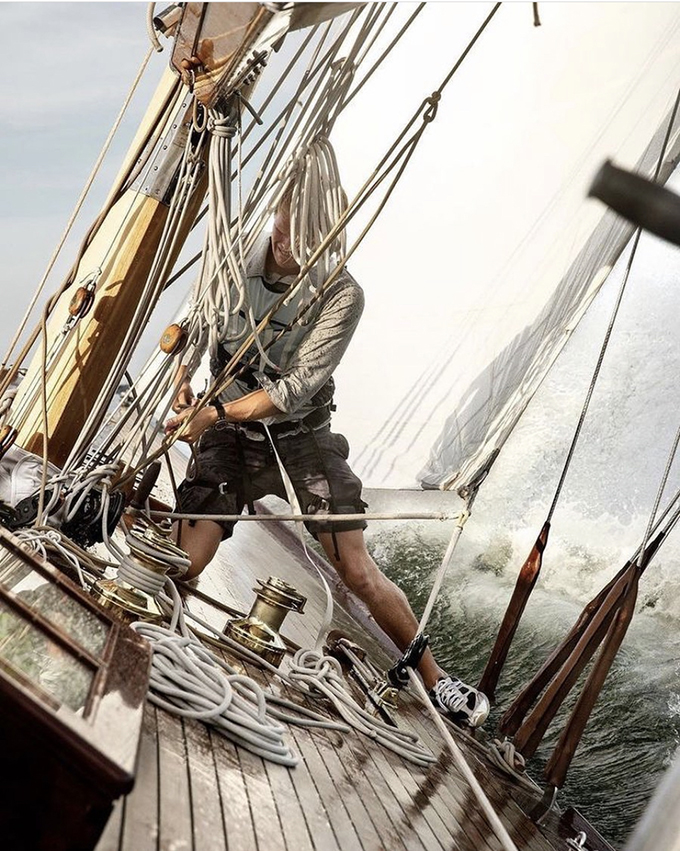
Then, by his own account, he slid into yachting by accident. At the end of the nineties, he joined a 52-metre Perini Navi as divemaster, dinghy sailing instructor and deckhand under Captain David “Hutch” Hutchison, a storied figure in sailing circles. Booth learned how to polish and shammy until his knuckles bled, taught guests to sail dinghies and scuba dive, then moved on to the Mirabella programme (Mirabella and Mirabella III) for the Vittoria family. That was his introduction to luxury yachting. He went back to school, took his engineer’s licence, spent a few years in the engine room and got his first captain’s job in 2002. “I’ve never looked back since. As I said, it has been an accidental career.”
Like most seasoned captains of his calibre, Booth has the maritime anecdotes you’d probably expect: cracked rudders mid-Atlantic; a 1,200-mile run from the Azores to Barcelona on a rudder bolted back together with steel plates; a Pacific evening with a super pod of three hundred dolphins riding the stern wave for forty-five minutes, manta rays flipping themselves out of the water to clean off barnacles; villagers paddling out at dawn off the Panamanian coast with a dugout canoe full of fruit. But it is his time on land that offers the deepest insight into his values. By the mid-2000s, Booth was captain on a yacht belonging to the New Zealand philanthropist Owen Glenn, working closely with the “firm but fair” businessman during his six-year tenure. Booth describes a strong, clever, business-savvy owner who guided him as he entered his senior career, helped him to grow and even covered the bar tab at his and Lynette’s wedding.
A broad six-foot-three “blonde bloke” hauling a backpack into a village where the tallest person came up to his chest was not what anybody had ordered.
Glenn’s philanthropic outfit funds development work in the Himalayan hill country of north-east India, close to the Nepalese border. Five years into Booth’s stint on board, Glenn noticed his drive had plateaued, that he was going through the motions. “He said to me, ‘You’re bored on here. You can do all this with one hand. My problem out in India is that I don't have anybody on the ground. I’ve got all these ideas, but nobody can get the job done. Would you like to go out to India?” Needless to say, Booth immediately put his life in a backpack and subsequently spent three months sleeping in a hut in the mountains. This was the adventure he needed.
Working alongside the Lions Club International, local doctors and church groups, he helped build a library for a girls’ school, ran medical camps where people walked for days to get cataract drops, built water-sanitation plants, converted Land Rovers into mobile ambulances and introduced animal husbandry, livestock and cooperative farming. It took some warming up too – a broad six-foot-three “blonde bloke” hauling a backpack into a village where the tallest person came up to his chest was not what anybody had ordered. Moreover, the villagers initially assumed Booth to be the benefactor of the programme. “I had to say to them through an interpreter, I’m not the benefactor, I work for him, I’m an engineer. Look at my working man hands,” he laughs.
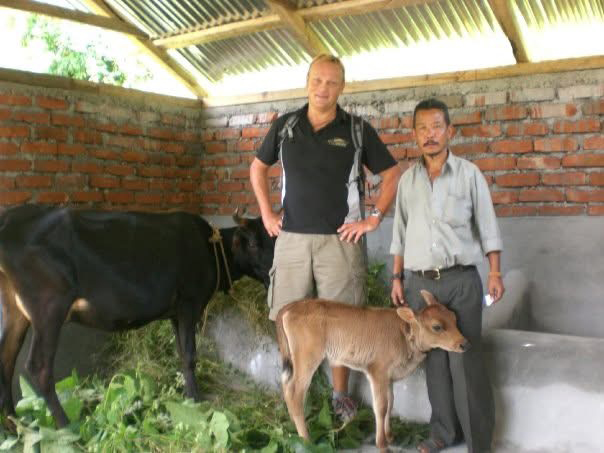
It was when he met an elderly couple that the budding engineer, now in his early thirties, had one of the more profound experiences of his life. The village elders were immobile, living in a squalid shack no bigger than a garage and could no longer climb the stairs to their house, having to shimmy on their backsides to get to and from it. This couldn’t do, Booth thought. He would build them a new house, but first, he needed materials.
The foundation required rock, and naturally, the riverbed and source of said rock was three-quarters of a mile below the village, straight down the sheer mountain. And while some of us may not be versed in the transport of individual river rocks hundreds of metres up a mountain in the Indian heat, Booth assures that the best technique was loading them into a woven basket on your back, supported by a strap over the forehead, padded with folded cloth, hands underneath the basket, eight to ten rocks a load. We’ll have to take his word for it.
The endeavour was a slog of mighty proportions as he and two others took to the task, trudging up and down the mountain as the sun moved across the Himalayan sky. But, little by little, word of their mission spread, with more joining, coming to lend a hand (and presumably their heads too). By lunchtime, there were a dozen of them. By day three, thirty people were moving up and down the mountainside, a human anthill with men carrying materials and women cooking food in woks, others bringing drinking water. The whole community had come together to help their own and Booth was at the centre of it all, hauling alongside them, as one of them.
“By the end, we were bushed. We were bleeding and dirty and sweating and lying down on the ground exhausted, eating rice with our hands. No language between us. But when you’re looking at a bloke beside you and he’s just as knackered as you are and you’re eating the rice, and you look at him, put your thumbs up and go – ‘good’. And they reply with their hands and their language, ‘I hear you, brother’. You’re drinking a big jug of water and you hand it to him and he drinks it. Person to person, you just think we are all the same, we are all human.”
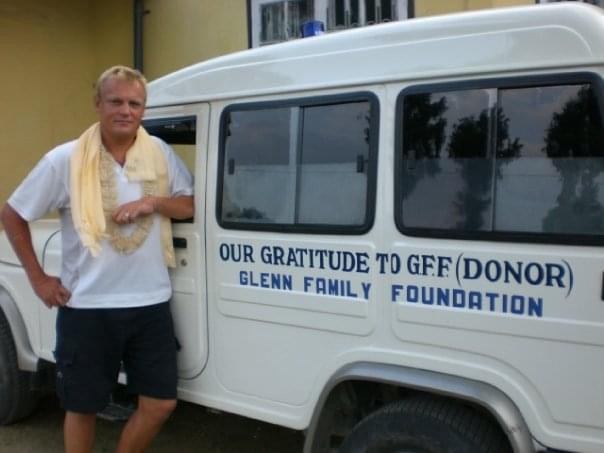
The new house comprised a sturdy combination of wood and corrugated iron, built around a clay-brick stove at standing height so the elderly couple wouldn't have to crouch to cook. Six months in, Booth came back to England to get married. After the wedding, he flew Lynette, a self-proclaimed London city girl, straight back to India. The village threw a festival to welcome them back with coloured flags, a banquet of food and the whole community in attendance. He was greeted like a son.
The experience absolutely transformed Booth’s view of the world. “It brought back values that my parents had worked so hard to instil and that perhaps over time I'd disconnected from. Respect for everyone, no matter where they’re from or what they look like, or who they pray to. A real, genuine understanding, not just the philosophy, but a first-hand experience and a belief that we are all the same. We all want the same things: food, shelter, companionship, six feet to lie down and some form of working activity that yields a sense of accomplishment. And family.
The years that followed were about choosing who to climb the career ladder with, rather than
climbing for climbing’s sake. As the boats got bigger, the crew lists got longer and many of the
young people he sailed with in his twenties and thirties stayed in his life and in the industry,
some running boats of their own.
“It also showed me just how resilient I can be with the power of the mind. Going into yachting, there are some long days and difficult challenges. Weather, gear failure, difficult guests, demanding, unreasonable crew. It takes resilience to face all of those with humility and not to point fingers and blame everybody. To reflect first of all on what could I have done differently to make a better outcome. You must look in the mirror first.”
The Himalayan months had reignited the perspective of life first found while at anchor off the Fijian coast all those years ago. What he brought back to the bridge was a different way of running things. Booth had never been the kind of captain who stood on the wing in whites. Even on a forty-metre, he was still driving the tender, doing wash-downs, turning the laundry over, helping where he could. India sharpened that instinct. The years that followed were about choosing who to climb the career ladder with, rather than climbing for climbing’s sake. As the boats got bigger, the crew lists got longer and many of the young people he sailed with in his twenties and thirties stayed in his life and in the industry, some running boats of their own. And after all those years of searching, the project of a lifetime arrived.
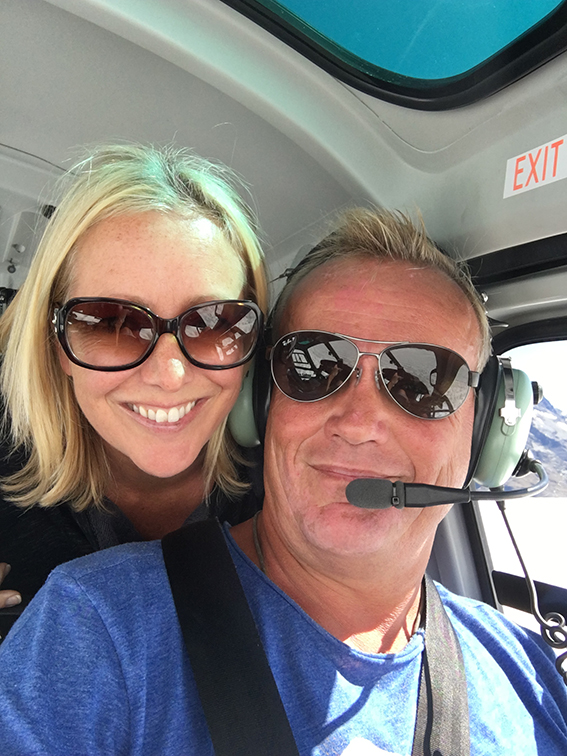
Lynette, Booth’s wife, heads HR and procurement for Phi.
Working on Phi might have been a labour of love, but it was labour, nonetheless. The owner wanted something game-changing. To do something that had never been done before. The pair spent two and a half years developing the concept, discussing the boats they admired, what they thought worked and what didn’t. They spent their evenings over tables with photographs sprawled across them, scribbling in notepads as wastepaper baskets filled up. Booth had also returned to school to learn how to use AutoCAD, reading into the early hours of the morning until he was cross-eyed, learning what he needed to be useful in the build conversations.
Naumenko had been approached by several of the industry’s established yacht management companies, each pitching glossy, chapter-and-verse proposals to run the build. He sat down with Booth in Türkiye, where his current yacht was berthed, the proposals stacked in front of him. “He went through them chapter by chapter,” Booth recalls. “‘Can you do that?’ he’d ask me. ‘You could do that, right?’, sure. I’d say. Technical management, yeah, I’d need some resources, but I could do that. Financial management? No problem, sure, I can. And then he said, ‘Now, what about your wife?”
Phi means so much to so many minds and hands that worked on the project, not least Booth –
and it’s why he refuses to give up.
Lynette had a career in business in the City before the children and Naumenko knew it. The pages kept turning, the questions kept coming. Could she handle HR, payroll, employment contracts? Procurement, for two new superyachts, everything not covered by the build, of which Booth notes with a grin, there are sizeable loads of. What followed were Friday night meetings for the duration of the build. Two couples, two video calls, two halves of one long conversation. “The first half would be with me and we’re talking about gyro stabilisers or exhaust stack heat recovery systems. And then the second half is all about glassware and silverware and crockery and bed linens. Before you know it, my wife and I, my chief engineer, my chief officer, my chief stew, our lawyer, our accountant, our consultant, I’ve got a whole management team. As I said, it’s been an accidental career.”
Named after the Greek letter for the perfect ratio, Phi was the epitome of the eureka moment on its inception. With the family running the project, the next decision was the yard and there are only so many people you can call on for something truly fully custom. They knew they wanted a sailing yacht hull on a motoryacht. Lightweight without compromising rigidity. Several of the bigger established yards were approached, most said no. “Other big builders said, ‘That’s not how we do it’. And Royal Huisman said, ‘We’ve never done anything like that. But we can do it.’ Their group of wonderfully nerdy, intelligent, driven engineers and problem solvers came back with pages and pages of custom engineering solutions that had never been done before but were necessary for Phi.”
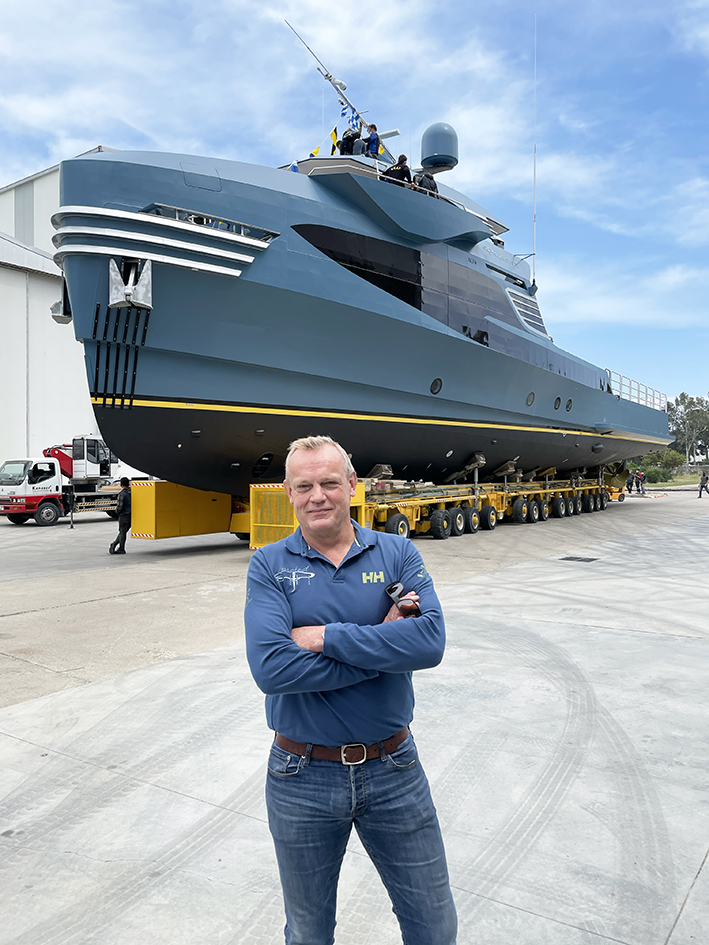
It’s a sore subject within the context. Years of trial, error and painstaking efforts to make something genuinely different, only to have the boat collecting dust in a London loch. The naval architects at Van Oossanen, the exterior designer Cor D. Rover and the interiors team at Lawson Robb all took it on as
a flagship project. It should be one of the crown jewels of the fleet; it is only one of two motoryachts ever built by Royal Huisman and that means something to everyone who worked on it. And even in an operational sense, the vessel is teeming with acute features that hadn’t been seen previously: extra-wide teak walk-arounds that let crew board a tender without clambering over high bulwarks in front of guests and outboard sun lounges with glass floors, suspended over the sea and reserved for the crew.
Phi means so much to so many minds and hands that worked on the project, not least Booth – and it’s why he refuses to give up. “I liken Phi to my third child and four years ago, she was diagnosed with leukaemia. Four years of pain and suffering. What do I do? Do I stand up and walk away and join another family that’s got three healthy children? Do I fuck. I roll my sleeves up, I do what my dad taught me to do – I knuckle down. And leukaemia is curable.”
“The only way the British government will let us go is if the war ends, and then we can’t claim
damages, because the reason for detention no longer exists. So, I think, personally, I believe
delay tactics are in play.”
So now they look to the ECHR. The UK Supreme Court ruling last summer went against Phi’s appeal, exhausting the domestic options. They firmly believe the ECHR will side with the plaintiff. He remains non-sanctioned anywhere, by anyone. The British court has separately granted permission to pursue a claim for damages. Booth won’t disclose the figure, but it will be “massive”. The Department for Transport does not have that kind of money on its books and if the ECHR finds for Naumenko and a damages claim succeeds, the bill is paid from the treasury, right from the public purse.
Phi’s detention, in Booth’s view, was the work of a single morally bankrupt politician who has since left office, looking to climb the ladder by appearing tough on Russia. The current government has inherited the consequences of that decision and now has no clean way out. There is, in any case, a second route to the same outcome. If the war in Ukraine ends before the ECHR rules, the legal basis for Phi’s detention falls away and so does the damages claim. The boat is released, the government pays nothing, the public purse is untouched. Booth believes this is not lost on Westminster. “The only way the British government will let us go is if the war ends, and then we can’t claim damages, because the reason for detention no longer exists. So, I think, personally, I believe delay tactics are in play.”
What concerns the wider industry is what Phi suggests about the UK as a jurisdiction. Naumenko was never sanctioned, he has never had political influence in Russia. The detention rested on a direction made by a Transport Secretary in the immediate aftermath of an invasion, and has now outlived him in politics, multiple governments and several legal challenges. If that can happen to one boat, it can happen to any.
“The government has decided that the war that America and Israel are currently conducting in Iran and Palestine is not our war. It is an illegal war, and yet they’ve not sanctioned any Israeli or American assets,” Booth explains bluntly. “But couldn’t they say that an American owner’s superyacht in London, we’re going to sanction that to show Mr Trump that we do not approve? That’s exactly the same. And now the British government don’t know how to get out of it without getting egg all over their face.”
Naumenko himself is in failing health. The boat his family helped design and live alongside for sixteen years is now a source of anguish rather than pride. “He is nowhere near as in love with the boat as he once was,” Booth says, “and his family aren’t either.” Booth’s own hope is that the case runs its course, that the owner does not negotiate, that Phi is released either by an ECHR ruling or by the end of the war and that Naumenko then pursues the maximum damages available to him.
“It’s a matter of honour for me now. For the owner’s family, for my own family, for my own sense of achievement. If I walk away from it, I would be forever defeated and that’s just not in my nature.”
I can’t help but feel a deep level of admiration for Booth as our call begins to wind down. ECHR aside, the road ahead is filled with tangible promise. The level of passion and pride he has is palpable as he describes his latest projects. He is managing several boats, with permission from the owner of Phi, of course. But he is also working around a drawing board once more. “We are working on a replacement for Phi Phantom [the 36-metre Alia Yacht that was built to act as a support vessel for Phi]. So it’s going to be a companion vessel to Phi. We might even use the same hull as Phi, because I’ve never been to sea in anything quite like it. It is phenomenal at sea. The hull is beautiful. The most exciting part of that is propulsion, because a lot has changed in terms of available, accessible tech.”
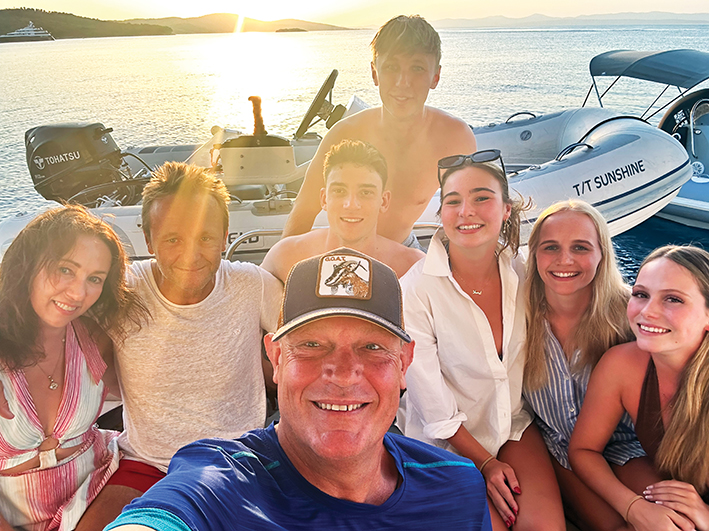
When not working on yachts, Booth hires them for family holidays. With his extended family in Croatia,
a favourite summer cruising destination.
This is where he belongs and it’s a place he’s fought hard to return to. And so, with a pang of professional guilt, I ask him, knowing what he knows now, would he do the same thing again?
“If I could speak to my younger self now, I would tell him to start saving money earlier,” he laughs. “Believe me, I had a good time in my twenties and thirties. I earned good money, travelled a lot, bought a lot of toys. But other than that, I would say do it all again, exactly as you’ve done it. This is what I impart to my children now. I’m 55 and I still don’t know what I want to be when I grow up. The universe will show you your path as it has shown me mine.”
When we had spoken last summer, in the immediate aftermath of the Supreme Court ruling, Booth had told me what he wanted from the end. “It’s a matter of honour for me now. For the owner’s family, for my own family, for my own sense of achievement. If I walk away from it, I would be forever defeated and that’s just not in my nature. I want to steam off down the Thames one day with my middle finger in the air. Then watch with glee as our lawyers serve papers on Mr Shapps, because that’ll happen.” He is slightly more measured this time around. “I’m staying with Phi until it reaches a conclusion,” he says with a knowing smile. “Then I’m going to go cruising – I want to and I need to.”
This article first appeared in The Superyacht Report: Captains Focus. With our open-source policy, it is available to all by following this link, so read and download the latest issue and any of our previous issues in our library.
NEW: Sign up for SuperyachtNewsweek!
Get the latest weekly news, in-depth reports, intelligence, and strategic insights, delivered directly from The Superyacht Group's editors and market analysts.
Stay at the forefront of the superyacht industry with SuperyachtNewsweek
Click here to become part of The Superyacht Group community, and join us in our mission to make this industry accessible to all, and prosperous for the long-term. We are offering access to the superyacht industry’s most comprehensive and longstanding archive of business-critical information, as well as a comprehensive, real-time superyacht fleet database, for just £10 per month, because we are One Industry with One Mission. Sign up here.
NEW: Sign up for
SuperyachtNewsweek!
Get the latest weekly news, in-depth reports, intelligence, and strategic insights, delivered directly from The Superyacht Group's editors and market analysts.
Stay at the forefront of the superyacht industry with SuperyachtNewsweek