
Croatia isn’t the outlier, it’s the warning signal
The Mediterranean charter market is entering a new compliance era – and Croatia isn’t the problem, it’s simply ahead of the curve…
For years, yacht charter discussions around VAT revolved around one thing: the rate – 13% in Croatia, 22% in Italy, 20% in France, 21% in Spain. The conversation was arithmetic. What was largely ignored was structural control, but that is now changing.
From VAT settlement to real-time supervision
Croatia’s expanded fiscalisation regime introduces a new enforcement architecture rather than a new tax. Under the updated system, any B2C charter invoice for a yacht that starts in Croatia must:
• be electronically transmitted to the Croatian tax administration
• receive a unique fiscal code (JIR)
• be validated before it legally exists.
If there is no fiscal code, there is no valid invoice. The payment method does not matter – bank transfer, card, escrow are irrelevant; if the place of supply is Croatia, Croatian fiscalisation applies. And that is the crucial legal point.
The place of supply is the only thing that matters
Under Article 56 VAT Directive, short-term hire of means of transport is taxed where the vessel is placed at the disposal of the customer and not where the owner lives, nor where the management company sits or where the yacht sails afterward, it’s where the charter starts; this is black-letter EU law. If the yacht is handed over in Split, the supply is Croatian; if in Genoa, it is Italian; if in Nice, French; if in Palma, Spanish. The compliance regime follows that starting point. Croatian fiscalisation is therefore neither extraterritorial nor arbitrary, it is territorial and consistent with EU law.
“Croatia is acting alone” – is it?
This is perhaps the most common industry reaction, but let’s examine the facts. Italy operates mandatory SDI e-invoicing, Spain runs near real-time VAT reporting (SII), France is introducing mandatory e-invoicing and the EU’s VAT in the digital age reform moves towards digital transaction tracking across the Union.
Croatia is not alone, Croatia is simply unapologetic. It has decided that yacht charter – a high-value, cross-border sector with advance payments and complex structures – must operate within a real-time invoice control framework. From a tax policy perspective, this is not surprising, albeit from an operational perspective, it is uncomfortable.
The real risk is not fiscalisation. it’s structural sloppiness
The danger doesn’t lie in the Croatian system, it lies in:
• incorrect VAT-ID usage
• mismatched place-of-supply determinations
• invoicing under the “most convenient” registration rather than the legally correct one.
A yacht holding multiple VAT registrations must issue invoices under the VAT-ID corresponding to the actual place of supply. If a charter starts in Croatia but is invoiced under an Italian VAT-ID to “simplify administration”, the issue is not Croatia’s enforcement, the issue is non-compliance, and digital systems reduce tolerance for such mismatches.
Operational reality in the Adriatic
Since 2013, CPS Schließmann has maintained a permanent office in Split and today supervises a substantial fleet of commercially operating yachts – predominantly serving owners and clients from Germany, Austria and Switzerland. We know the transition to real-time fiscalisation is not theoretical, it has been implemented across a live operational fleet.
The practical experience is clear: fiscalisation is not a paperwork detail and it must be embedded into:
• booking workflows
• ERP systems
• invoicing processes
• VAT-ID allocation procedures.
The charter invoice is no longer a document produced after the fact, it becomes a controlled digital event.
What this means for charter operators
For companies operating in multiple EU jurisdictions, the checklist is no longer optional:
1. Determine the exact physical charter commencement point.
2. Allocate the correct VAT-ID.
3. Apply the national invoicing regime of that jurisdiction.
4. Ensure fiscal transmission where required.
5. Maintain digital audit trails.
This is structural compliance and not just not bureaucracy.
The industry’s choice
The superyacht industry often positions itself as highly professional and globally structured, so tax compliance must match that level of sophistication. Digital VAT control is part of a European trajectory, not a temporary Croatian experiment.
Operators who integrate these requirements now will operate smoothly. Those who dismiss them as “regional overreach” may discover that retrospective corrections, penalties and scrutiny are far less comfortable than proactive compliance.
Croatia has not changed the VAT rate, it has changed the transparency threshold – and that threshold is unlikely to move backwards.
NEW: Sign up for SuperyachtNewsweek!
Get the latest weekly news, in-depth reports, intelligence, and strategic insights, delivered directly from The Superyacht Group's editors and market analysts.
Stay at the forefront of the superyacht industry with SuperyachtNewsweek
Click here to become part of The Superyacht Group community, and join us in our mission to make this industry accessible to all, and prosperous for the long-term. We are offering access to the superyacht industry’s most comprehensive and longstanding archive of business-critical information, as well as a comprehensive, real-time superyacht fleet database, for just £10 per month, because we are One Industry with One Mission. Sign up here.
Related news
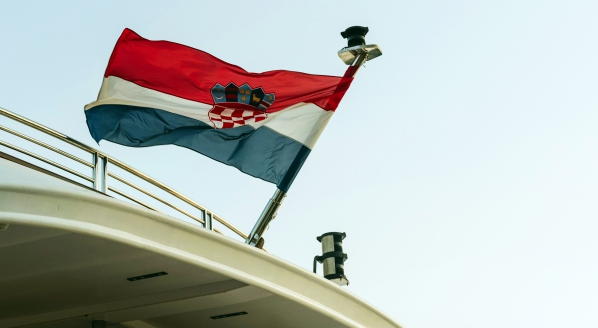

The heart of the Mediterranean
A recent trip to Malta offers a real perspective on the potential of this small but powerful island, perfectly positioned between the East & West Mediterran
Business
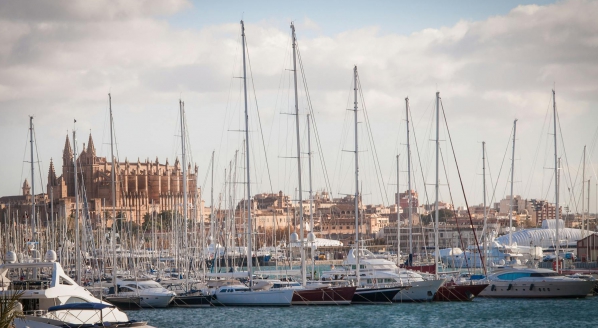
Charter, VAT and its accrual in international waters
Tax advisor Miguel Ángel Serra explains how VAT regulations could tip the balance in favour of Spain as a charter destination
Opinion

Related news
Croatia’s SSVO 2026 Revisions
5 months ago
The heart of the Mediterranean
8 months ago
Charter, VAT and its accrual in international waters
9 months ago
A legal labyrinth
11 months ago
NEW: Sign up for
SuperyachtNewsweek!
Get the latest weekly news, in-depth reports, intelligence, and strategic insights, delivered directly from The Superyacht Group's editors and market analysts.
Stay at the forefront of the superyacht industry with SuperyachtNewsweek