Building with purpose
If owners really want to connect with the ocean, why not create a culture that supports life below the surface?
What is the value of anything when you can have it all? It might sound like a philosophical exercise, but for an industry built on the aspirations of the ultra-wealthy, it’s a practical problem. This issue is converging with others and the superyacht sector has been slower to solve them than it would like to admit. One is that yachting has been losing good people for years and failing to inspire a new generation of crew.
The second is relevance, as a new generation of owners enters the market with a fresh set of expectations, drawn less to the familiar anchorages than to the places that demand a reason to be there: the fjords, the Arctic, Patagonia, Papua New Guinea. Beneath both of these sits the most blatantly obvious crisis that the ocean these vessels sail on is staring down the barrel of a gun – and the fleet that could do more about it than almost any other is largely choosing not to.
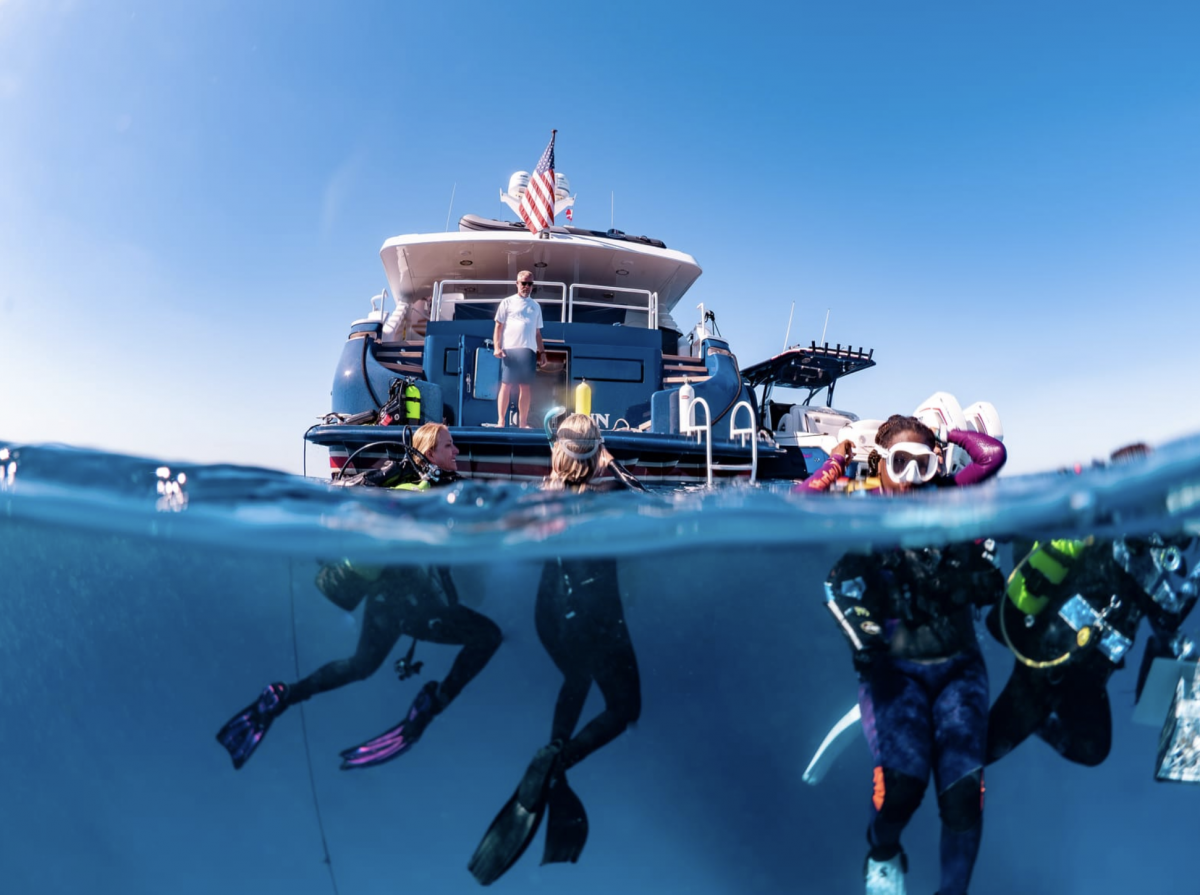
The likes of the International SeaKeepers Society have spent over two decades making the case that superyachts are extraordinary platforms for marine science and that the decision to use them as such is one of the most straightforward and impactful things the industry could do. The scientists are ready, programmes are built, expeditions planned and the opportunities listed. What’s missing, in vessel after vessel, is the decision to say yes. Aubrianna Keith, programme manager at SeaKeepers, has spent the better part of her career trying to change that.
Former yachtie Keith knows what a season feels like from both sides. She built her career as a dive instructor, first officer and underwater photographer (her work has hung in the National Gallery of the Cayman Islands and been published internationally) before a Master’s in Marine Science and Conservation pulled her towards the research side of the water. She now skippers SeaKeepers’ own research vessel out of South Florida. Her journey from crew to scientist-captain is a precise illustration of what this piece is about – and of how much further the industry still needs to go.
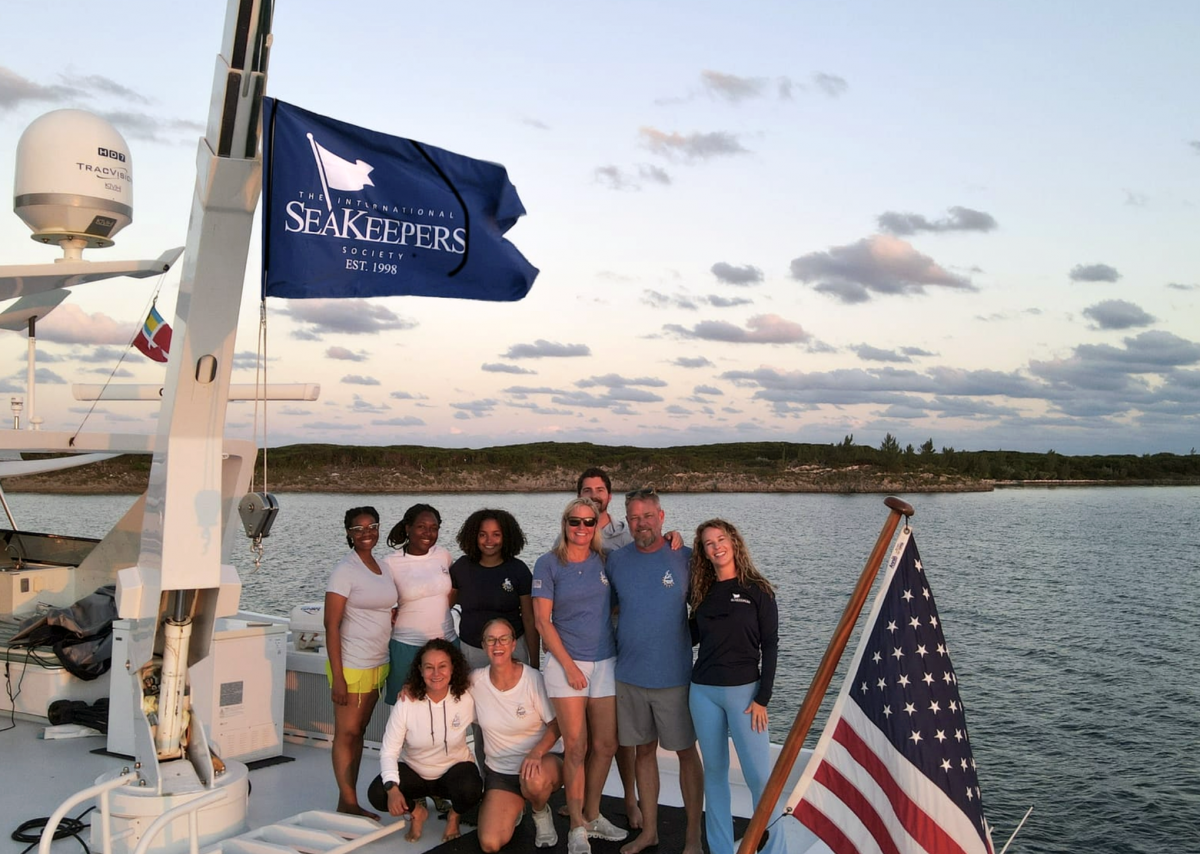
“It’s not just adhering to the bare minimum of MARPOL, but also realising that you can do so much more with this platform than just have it as a holiday vessel. I do see that in many captains. But there are also times when I’m surprised to see that some of these big superyachts, with full crews and owners, are very hesitant to open their vessels to outsiders. I get the privacy thing at that level of wealth, and they don’t want their asset ‘depreciated’ by heavy work. These are struggles at [30 metres and above] where we may get, for our expeditions, one, two, maybe up to five a year.”
Five vessels a year – from a global fleet of vessels that go everywhere, carry the equipment of a small research institution and anchor in places that science has never been able to reach. The superyacht industry has spent the better part of a decade talking about its relationship with the ocean: boat show panels, sustainability pledges, PR campaigns, award categories ... That number should be embarrassing.
Matthew Zimmerman, CEO of forward-looking sonar systems builder FarSounder, has been watching this from an instructive vantage point. His technology protects vessels from submerged hazards, but it also generates bathymetric data that vessels can choose to share anonymously, feeding it into Seabed 2030, the global initiative working to map the world’s ocean floor, less than a quarter of which has been charted to modern standards. A vessel on a routine Bahamian passage can contribute to ocean science without changing its itinerary by a single mile. He has seen what’s possible when this thinking is taken further but has also seen how rarely it is.
A new generation of owners is drawn to the places that require a reason to be there, with a growing appetite for experiences that the traditional charter itinerary cannot offer.
“I would argue that the industry has not done very well in framing this opportunity for the sector," he says diplomatically. “If these vessels are going to go to these places anyway and they’re going to do these things anyway, FarSounder can develop a technology that will reduce their negative impact by avoiding hitting a rock, causing an oil spill, avoiding ploughing through the coral reef and avoiding hitting a whale. Those are all things that have value to the vessel operator while they’re doing the things they’re already going to do anyway. If I can also make it have less impact and avert a disaster, that is a positive thing I can personally bring about. But really, it’s a lack of education that we’re fighting against. We need to educate people that you don’t have to do it the way it’s always been done and get something better out of it.”
This is where two crises meet. The crews that engage most deeply with SeaKeepers share a common trait. “Having a crew that is of the mind of ‘this is super important to me. I work on the ocean and I want to give back’, that has always been our most successful relationships within the superyacht industry,” Keith explains. “Sometimes we get the owners reaching out to us, but the majority of the time it comes from the crew.”
This is where the retention argument can be framed more effectively: a crew that’s engaged and happy is more likely to stay, which has direct value to the vessel. So even if the owners don’t care at all about participating in those activities, the crew likely does and having opportunities for the crew to participate is one way to retain and attract the crew they want to keep. Even selfishly, there’s a direct benefit for the owners. And yet the question of value keeps returning. Zimmerman asks: “For someone like you or me, we had to save, we had to choose, we had to work hard to earn. But if you can have anything at any time, what is the value of those things? Observing from the outside in, it seems like having a purpose, having an experience, doing something, creating something, brings genuine value to that trip, that asset. And I think that’s still largely untapped in the superyacht sector.”
Speaking to brokerage leaders, like Fraser’s Anders Kurtén in this issue, we are seeing the same shift from where he sits – a new generation of owners drawn to the places that require a reason to be there, with a growing appetite for experiences that the traditional charter itinerary cannot offer. “There is this real sense of connection with the sea,” Zimmerman continues. “People want to go to more exotic places, not the typical yachting hubs. It’s not the Riviera, it’s not the Caribbean. It’s going to the fjords, going to the Arctic, going to Patagonia, Papua New Guinea. It’s just so interesting seeing that shift happening before our eyes.”
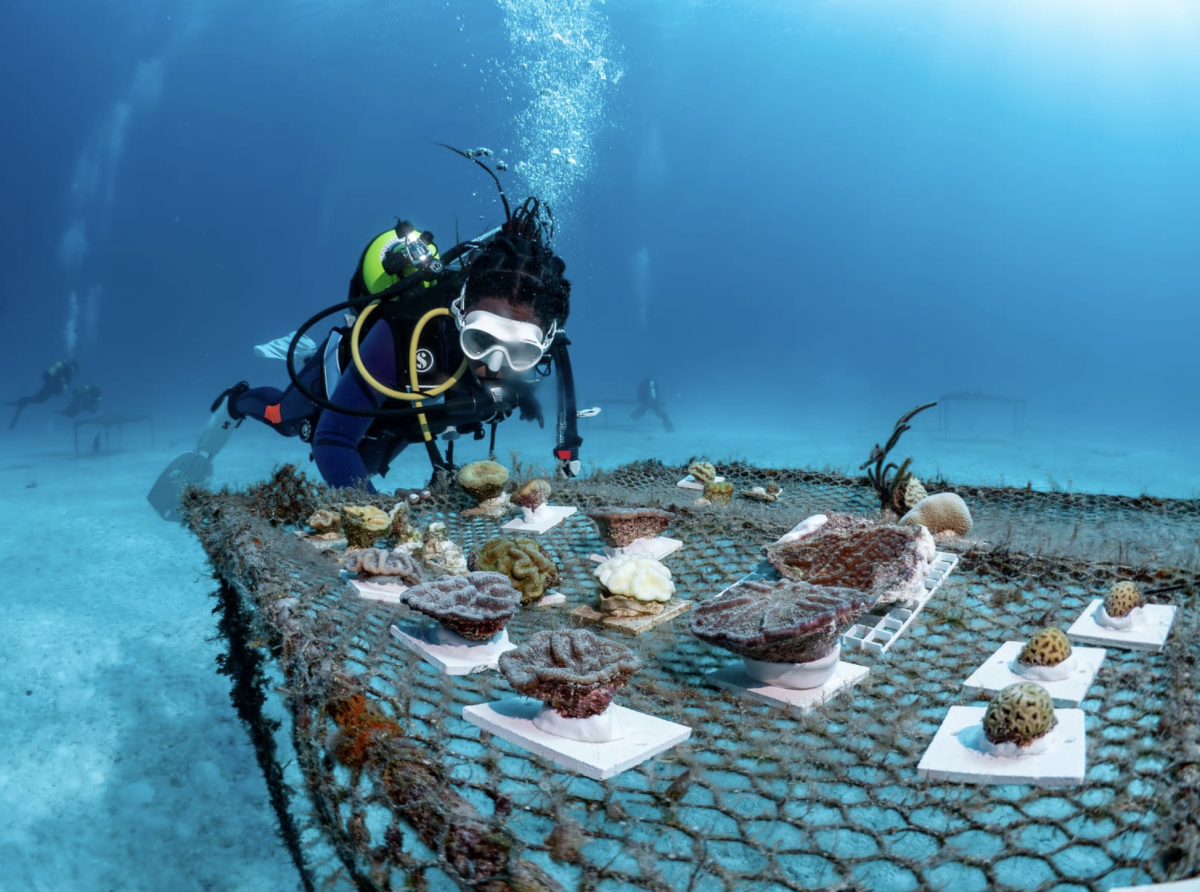
This is where yachting science can step in. SeaKeepers’ Discovery Programme connects private vessels with marine scientists who need them, turning yachts into platforms for field research across four chapters operating in the US, UK, Southeast Asia and the South Pacific. The work that results is not peripheral either. In autumn 2025, the 51-metre Discovery yacht Northern Sun spent three weeks in the Banda Sea with Unseen Expeditions and Pattimura University, looking for the elusive coelacanth (a fish the world had assumed extinct for 65 million years until one turned up in a South African fish market in 1938 and which has been seen so rarely since). Having caught a brief glimpse of the prehistoric fish the year before, the team used technical diving and high-resolution seafloor mapping to hunt for the steep drop-offs and submerged ridgelines where coelacanths are known to shelter. Although the coelacanths avoided their gaze, the scientists found new reef terrain that had not been recorded before. The work was published in Nature.
Meanwhile, the 58-metre Discovery yacht Unbridled spent the 2025 summer season sailing in the remote channels of south-east Alaska with renowned marine ecologist Dr Fred Sharpe, watching humpback whales, blissfully logging where they were, what they were doing and whether the population was healthy. Sharpe has been doing this in Frederick Sound since the late 1980s and the only reason the dataset is continuous is that vessels keep showing up to help him do it. So these are not one-off vanity expeditions but genuine scientific contributions that would not exist without the vessel. The crew of Unbridled is now hosting SeaKeepers and Misión Tiburón to conduct research on populations of highly migratory shark species, such as the great hammerhead, off the coast of Caño Island, Costa Rica, as scientists gather essential data on migration routes, habitat use and potential threats.
“[Even] at the minimal level, there’s a lot that can be done with relatively little cost to the vessel and the guests, providing some sense of purpose and excitement and, by the way, also to the crew that is involved.”
“Nobody who’s done it has ever come away underwhelmed and said, I don’t need to do that again. You usually come back and want to do another expedition, feeling that was the best week I ever had on my boat. I learned so much. I was able to really appreciate and understand all of these environments that I’ve been operating in in a way that I never did before,” says Keith. “It’s a completely different, unique experience. You’re an adventurer, you’re an explorer, you’re experiencing something no one else in the world will ever see. And that’s what yachts can really do, but oftentimes you’re not going to do it if you’re sitting in the same anchorages, having sundowners and going to the same restaurants every year.”
There is a gap between enthusiasm and action that SeaKeepers knows well. Crew follows the stories, tells each other they’d love to do it, then the season starts and the routine takes over. “The hesitation is from the owner or the captain. The only way you’ll be able to convert them is if they are excited about it too, and you can do that by bringing them on board. Often, these vessels are large enough to support not only the research teams but also the owners, and if you get them participating in the research, just experiencing and directly seeing the tangible impact of what your donation is, this is the most tangible kind of donation that you can make. You’re not writing a cheque, you’re hosting people, you’re sharing your world with them, getting them out into the field. And you can experience the research with them a lot of the time,” Keith says.
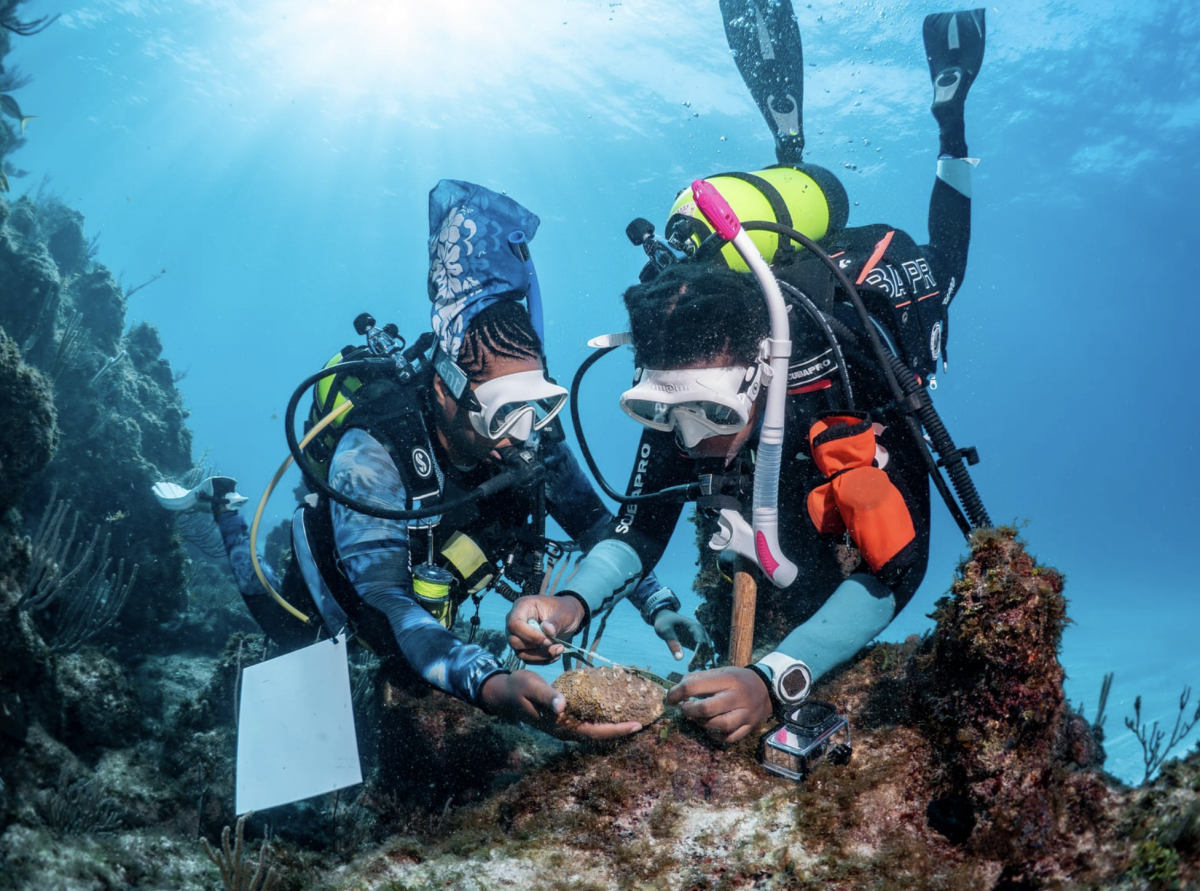
None of this requires going somewhere extraordinary (for yachts at least); The Bahamas count, the Med counts. Indonesia counts. Most of the ocean floor has never been surveyed to modern standards and even in the most well-travelled yachting waters, the seabed data on a digital chart is often based on old soundings, interpolated estimates or surveys that predate GPS. The display looks complete but the data frequently isn’t. A vessel with the right equipment running on a routine passage is already contributing something real without changing course by a mile.
“These can be as minimal an effort as clicking the checkbox in our software to say yes, we will share bathymetry anonymously and contribute to Seabed 2030, or it could be as complex as bringing scientists on board and planning an expedition, teaming up with the International SeaKeepers Society or Yachts for Science,” says Zimmerman. “And it can be even more involved still, to the Ocean Xs and the REVs of the world, where they’re building purpose-built vessels and bringing on purpose-built teams for that work. It’s a whole spectrum, with varying levels of impact and results. But at the minimal level, there’s a lot that can be done with relatively little cost to the vessel and the guests, providing some sense of purpose and excitement and, by the way, also to the crew that is involved.”
There are signs the industry is beginning to understand this, however. SeaKeepers alone has completed a scientist-led expedition and published peer-reviewed publications from work conducted aboard recreational vessels. The Discovery Fleet now spans four chapters across the US, UK, Southeast Asia and the South Pacific, and the programme opportunities page lists new projects on a daily basis.
At the engineering end, the shift is visible too. Yards are starting to build for it rather than retrofit toward it. Icon Yachts’ Project Master was conceived as a science platform from the keel up. Oceanco is building vessels that support Gabe Newell’s Inkfish research fleet as part of its core output. The likes of Damen Yachting, Discovery and Cantiere delle Marche are increasingly equipping their explorer vessels with technology to operate in remote, scientifically significant waters. But it’s also fleet that already exists, sitting at anchor in the same bays it visited last season, that is the opportunity. Most researchers spend their careers working off university vessels that are barely maintained, donated boats with outdated equipment and small centre consoles that were never built for the work. The prohibitive cost in marine science is about getting to the water and having a platform capable of supporting the work once you’re there. A superyacht arrives with cranes that can lower research equipment over the side, has swim platforms for easy water access, deck space for drone and ROV deployments and crew to handle vessel operations so the scientists can focus on the science.
“The yachts just don’t understand that they already have everything they need and more, most of the time, to be a perfect platform for most of these research projects,” Keith says. “As long as you have available bunks, it’s a safe vessel and you’re willing to host the researchers, usually that is enough.” A day or two of field research doesn’t diminish the holiday. It tends to become the part guests talk about for years afterwards. For owners, it’s unambiguous what it delivers. From a citizen science and conservation perspective, it brings guests a sense of purpose. They have done something with measurable impact, even if it is small. It is still tangible, still real, and they can claim ownership of it. They have helped enable the discovery of something previously unknown.
But for crew, research can break the monotony that inevitably settles in during long seasons built around repetition. Of course, yachting can be extraordinary, but it can also be cyclical. Part-icipating in research reframes that experience, turning a passage into a data run, a dive into a survey, a remote anchorage at a site of potential discovery. Crew turn contributors, learning from scientists and engaging with the environment they work in every day, but rarely have time to truly understand.
In an industry wrestling with retention, that sense of doing something of purpose actually matters. Sure, some yards are building for exploration and a new generation of owners is asking different questions. The industry might be changing, but is it changing fast enough?
The Superyacht Report is starting a new series on yachting with a purpose. If you are are operating or building vessels with an oceanographic, scientific or philanthropic cause, get in touch: conor@thesuperyachtgroup.com
This article first appeared in The Superyacht Report: New Build Focus. With our open-source policy, it is available to all by following this link, so read and download the latest issue and any of our previous issues in our library.
58.23m 10.90m 3.10m 803
Geoff Van Aller
Patrick Knowles Designs
Trinity Yachts
NEW: Sign up for SuperyachtNewsweek!
Get the latest weekly news, in-depth reports, intelligence, and strategic insights, delivered directly from The Superyacht Group's editors and market analysts.
Stay at the forefront of the superyacht industry with SuperyachtNewsweek
Click here to become part of The Superyacht Group community, and join us in our mission to make this industry accessible to all, and prosperous for the long-term. We are offering access to the superyacht industry’s most comprehensive and longstanding archive of business-critical information, as well as a comprehensive, real-time superyacht fleet database, for just £10 per month, because we are One Industry with One Mission. Sign up here.
NEW: Sign up for
SuperyachtNewsweek!
Get the latest weekly news, in-depth reports, intelligence, and strategic insights, delivered directly from The Superyacht Group's editors and market analysts.
Stay at the forefront of the superyacht industry with SuperyachtNewsweek