Shipyard CEOs on the state of the market – an interview with Rose Damen
Market-leading shipyard executives offer a collective diagnosis and a clear barometer of the current new-build landscape…
There is no shortage of people willing to tell you where the market is heading. Brokers, project managers, owners’ reps, consultants and journalists all have a view, but the perspective that tends to be least heard in public and arguably the one that matters most belongs to the people who actually run the yards. So we asked nine of the market-leading shipyard executives the important questions to get a true understanding of where the market is and where it is heading. Their answers amount to a collective diagnosis and a clear barometer of the current new-build landscape.
The yards represented here span the full competitive range of the European market, from Royal Huisman, Damen Yachting and Feadship in the Netherlands to Palumbo, Sanlorenzo, Azimut Benetti and Ferretti in Italy, from Abeking and Rasmussen in Germany to Bilgin in Türkiye. Of course, they don’t agree on everything, but the convergence on certain themes is inescapably evident.
It is a near-united front on how they build. The past two to three years have brought a genuine step change in how these yards organise and deliver: facility redesigns, digital tools, closer integration between engineering and production and a concerted push to eliminate the late-stage revisions that have historically plagued new builds feature in almost every response. Obviously, skilled labour is the constraint that no investment in facilities can fully resolve. Finding the right people, training, keeping and ensuring the craft knowledge that makes these yachts exceptional is passed to the next generation is the essential thread that runs beneath everything else these leaders say. Supply chains have stabilised but remain brittle for specialist components. And in cost management, the ability to maintain quality without haemorrhaging margin is repeatedly cited as the factor most likely to define who thrives.
Yes, order books are strong, but the nature of what is being ordered has shifted. Owners are more considered, more experience-driven and increasingly motivated by how they spend their time on board. Purpose, sustainability and genuine adventure are genuine design drivers here. And when probed on the future, not one of these leaders talks about explosive growth. What they describe instead is a market that will be defined by the quality of what is delivered, the credibility of the yards delivering it and the ability to remain relevant to a generation of owners whose expectations extend well beyond the vessel itself.
What follows is an interview by News Editor Conor Feasey with Rose Damen, the Managing Director of Damen Yachting, from The Superyacht Report: New Build Focus. Interviews with a further eight shipyard CEOs will be published over the coming days.

What changes have you made across your yards over the past two or three years that have genuinely helped construction and what has improved as a result?
Over the past two to three years, we’ve undertaken significant operational improvements across our yards that have genuinely transformed how we approach yacht construction. We’ve redesigned our yard layouts to optimise workflow efficiency. This has involved strategically relocating project teams to work in much closer proximity to the actual yacht construction areas, eliminating unnecessary distances and delays. We’ve also reconfigured how our teams collaborate, breaking down silos so that different disciplines work together more seamlessly throughout the build process rather than in isolated phases. Additionally, we’ve extended our facilities to accommodate these new working arrangements and support the enhanced operational flow.
We’ve seen marked improvements in construction efficiency, with projects progressing more smoothly and pre-dictably. Construction timelines have been reduced as a direct result of these changes. Perhaps most importantly, communication has improved both in terms of speed and quality. Information flows more naturally between teams when they’re physically closer and organisationally aligned, which means issues are identified and resolved faster, and coordination is far more effective.
These improvements haven’t just impacted isolated metrics; they’ve had a positive ripple effect across entire projects. Better team communication directly translates to better construction outcomes, fewer delays and, ultimately, higher quality yachts delivered more efficiently to our clients.
Where is the pressure really building today? What has not worked as well as expected and where do you see the greatest risk to the market?
We’re observing a shift in client behaviour with semi-custom projects. Clients are stepping into the build process later in the timeline, which can create con-siderable pressure on on-spec builds. This hesitancy adds both financial risk for yards and operational complexity. When clients delay their involvement but still want to make changes deeper into the construction process, it creates tension between accommodating those requests and maintaining delivery schedules for subsequent projects. We believe this hesitance is heavily influenced by ongoing geopolitical unrest, which is clearly impacting the decision-making confidence of potential owners.
However, the most substantial threat we see is to the reputation of the superyacht sector itself. With rising anti-wealth sentiment and increasing climate concerns among younger demographics, the industry is in genuine danger of becoming irrelevant to future generations of potential yacht buyers. This is not just one yard’s problem, it’s an industry-wide challenge that requires all of us to work together proactively to address. We need to demonstrate our value, our commitment to sustainability and our relevance to society in ways that resonate with evolving values.
Another critical risk lies in skills preservation. As yacht builders, we depend on certain crafts and trades that simply cannot be replaced by AI or robotics. The human touch, the artisan skills, the traditional craftsmanship – these are fundamental to what we do. We must ensure that these hands-on skills are actively transferred to the next generation of craftspeople or we risk losing the very capabilities that make our yachts exceptional.
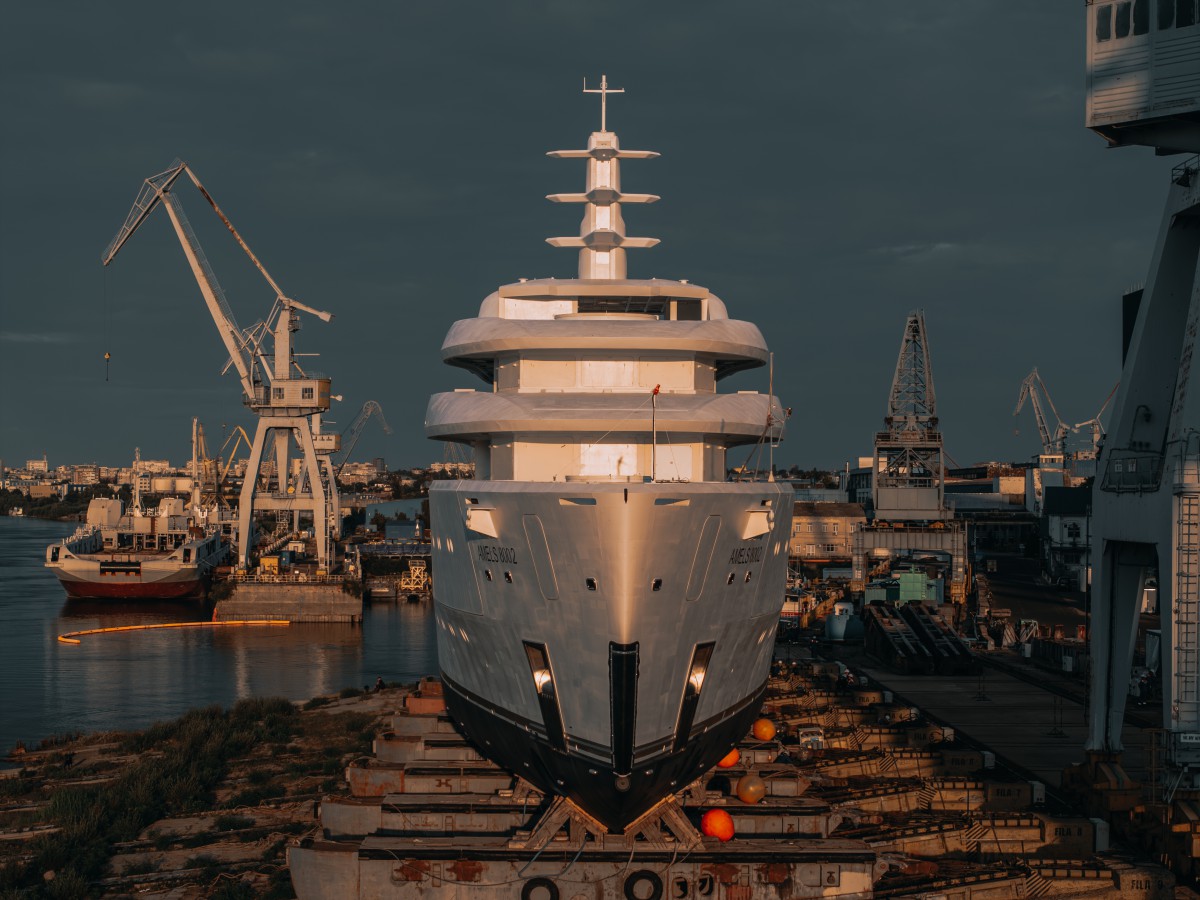
There’s a growing desire to travel with purpose, to experience genuine adventure and to get more out of the time spent on their yachts.
Looking at different specs, designs and size segments, where are you seeing strength in demand and where are you seeing a softening? What is driving it?
We’re seeing notable strength in specific size segments, particularly an interesting upward shift in entry points. Where owners previously stepped into our sector at around 50 to 55 metres, we’re now seeing newcomers starting at 60 to 65 metres. The 80-metre market has been particularly strong and continues to show robust demand.
Beyond size, we’re observing strong demand for yachts built specifically to accommodate high-value charter pro-positions. This isn’t just about occasional chartering – these are yachts designed from the outset with professional charter operations in mind, and we believe the changing ownership structures linked to this trend will increasingly influence future designs.
Several factors are shaping current demand patterns. Geography plays a significant role: the geographical influence of owners directly impacts design specifications based on how and where they intend to use their yachts. Different cruising grounds demand different capabilities and features.
More fundamentally, how clients are using their yachts is evolving. Owners are spending more time on board than previous generations did. They’re looking for multifunctionality, yachts that can seamlessly transition between private family use and charter operations. There’s a pronounced shift towards yachts that support social lifestyles and adventure-focused experiences rather than purely formal entertaining.
All of these usage patterns are directly impacting layout decisions and feature specifications. We’re designing spaces that need to work harder and serve multiple purposes, accommodate different guest profiles and support more varied activities than traditional superyacht designs required.
Finally, on a more personal note, how do you see the market developing over the next decade? What does the future look like in reality?
Looking ahead over the next decade, I believe we’ll see the industry shaped by a fundamental shift in how owners view their time on board. There’s a growing desire to travel with purpose, to experience genuine adventure and to get more out of the time spent on their yachts. Owners are increasingly looking for the capability and capacity to do more than simply cruise: they want to engage in science, discovery and meaningful experiences. We’ll see enjoyment combined with mindful travel becoming the norm. This might take the form of creating financial returns through professional charter operations or it could mean owners choosing to be part of a bigger scientific cause, contributing to marine research, conservation efforts or exploration projects.
Sustainability will of course remain incredibly central to everything we do. However, we need to be realistic about what this means in practice. For the industry to truly make a difference, we need owners to foster an understanding of the time and investment required to create genuine impact. This isn’t about quick fixes or superficial gestures, it’s about meaningful, long-term commitment to change.
The future of the new build sector will rise with those yards and owners who embrace this more purposeful approach to yachting, those who see their vessels as platforms for experience, discovery and positive contribution. It will fall for those who cannot adapt to these evolving expectations or who fail to demon-strate genuine relevance to the values of future generations.
Profile links
NEW: Sign up for SuperyachtNewsweek!
Get the latest weekly news, in-depth reports, intelligence, and strategic insights, delivered directly from The Superyacht Group's editors and market analysts.
Stay at the forefront of the superyacht industry with SuperyachtNewsweek
Click here to become part of The Superyacht Group community, and join us in our mission to make this industry accessible to all, and prosperous for the long-term. We are offering access to the superyacht industry’s most comprehensive and longstanding archive of business-critical information, as well as a comprehensive, real-time superyacht fleet database, for just £10 per month, because we are One Industry with One Mission. Sign up here.
NEW: Sign up for
SuperyachtNewsweek!
Get the latest weekly news, in-depth reports, intelligence, and strategic insights, delivered directly from The Superyacht Group's editors and market analysts.
Stay at the forefront of the superyacht industry with SuperyachtNewsweek