Malta’s new US cruising privileges: what owners really gain
Our regular legal contributor spells out the tax and legal implications of greater operational freedom in US waters for European superyacht owners …
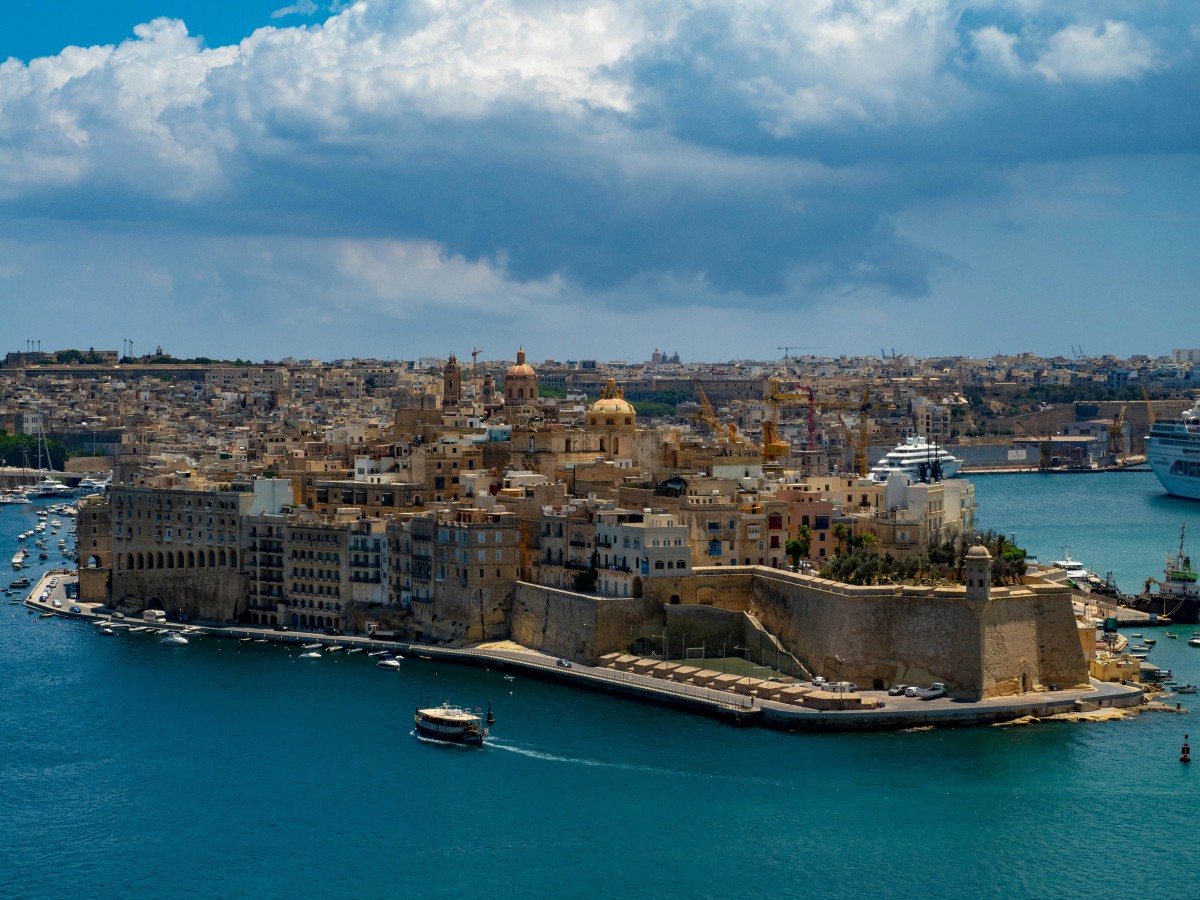
Malta has taken another significant step in strengthening its position as an international yacht registration jurisdiction. On 29 October 2026, US Customs and Border Protection (CBP) formally added Malta to the countries whose privately operated yachts may qualify for cruising licences in American waters. The announcement has been welcomed as a competitive breakthrough for the Maltese flag, and with good reason. Owners of Malta-registered private yachts can now benefit from customs and clearance procedures that were already available to yachts registered in several other established maritime jurisdictions. For a European owner planning to spend the winter cruising along the American coastline, this is welcome news. It may simplify movements between US ports, reduce administrative work and give the captain and yacht manager greater flexibility when planning the itinerary.
Yet the legal significance deserves closer attention. The new arrangement concerns customs procedures and cruising privileges. It does not create a new tax exemption, remove the restrictions on commercial chartering or change the European VAT treatment of a yacht. That distinction is essential when considering whether the development should influence an owner’s flag, ownership or operating structure.
A useful privilege with a defined purpose
The amendment to 19 CFR § 4.94(b), published in the US Federal Register on 29 October 2026, follows the principle of reciprocity established under 46 U.S.C. § 60504. The United States grants certain cruising privileges to pleasure yachts from countries that provide comparable treatment to American recreational vessels.
The cruising licence makes certain aspects of yacht movement easier. It does not replace the legal arrangements required for the people on board or the vessel’s wider presence in American waters.
Malta had confirmed in a diplomatic note dated 4 February 2026 that privately used yachts belonging to US residents could enter and depart from Maltese ports and cruise in Maltese waters without certain formal customs clearance procedures and associated charges. The US Department of State recognised this reciprocal treatment on 10 June 2026, making the privileges applicable from that date. The formal regulatory amendment followed in October. For eligible Malta-flagged yachts, the practical effect is straightforward. Once CBP has issued the relevant cruising licence, the vessel may move within the specified US waters without repeated formal vessel entry and clearance procedures, certain manifests or permits to proceed. The exemption also covers specified clearance fees and tonnage-related charges.
Anyone familiar with the administration involved in operating a large yacht internationally will appreciate the value of reducing these formalities. A superyacht visiting several American ports during a season needs considerable coordination between the captain, local agents, yacht management and public authorities. Simplifying part of that process is useful, even where the direct financial saving is relatively modest. However, the licence is not automatic. It must be obtained from the relevant CBP port director and may be issued for no longer than twelve months. Its conditions and geographical scope must be respected, and the master remains obliged to report arrivals to the appropriate customs office. Other regulatory requirements continue to apply. These include relevant US Coast Guard safety and arrival reporting obligations, as well as the immigration rules governing owners, guests and professional crew. In particular, European nationals arriving for the first time on a privately operated yacht should not assume that ESTA alone satisfies the applicable US entry requirements. Appropriate visas may be necessary.
The cruising licence makes certain aspects of yacht movement easier. It does not replace the legal arrangements required for the people on board or the vessel’s wider presence in American waters.
What changes for European owners?
The new entitlement is primarily linked to the vessel’s flag and its exclusively private use. It is not restricted to owners holding Maltese passports. A German, French, Italian or other European resident may benefit where the yacht is properly registered under the Maltese flag and meets the conditions of the US cruising-licence regime.
The question is not simply whether Malta now offers a benefit – it is whether that benefit improves
the owner’s existing position.
The rules also contain no general 24-metre limit, so larger private superyachts are not excluded simply because of their size. Their additional safety and operational obligations must, of course, be considered separately. For owners already operating privately under the Maltese flag, the change removes a practical restriction when cruising in US waters. For those considering Malta as part of a wider international ownership strategy, it adds another argument in favour of the jurisdiction. But Malta is joining an existing group rather than creating an entirely new advantage. Germany, France, Italy, the Netherlands, the Cayman Islands and the Marshall Islands were among the jurisdictions already eligible for US cruising licences. An owner whose private yacht is registered in one of those jurisdictions may therefore gain little from changing to Malta solely because of the October announcement. The new arrangement becomes more relevant where the yacht already has good reasons to operate under the Maltese flag or where its present registration does not provide comparable US privileges.
The question is not simply whether Malta now offers a benefit – it is whether that benefit improves the owner’s existing position.
Cruising privileges should not be confused with import-duty relief
Perhaps the most important misunderstanding concerns taxation and customs duties.
The announcement refers to exemptions from certain charges and duties, which might suggest that Malta-registered yachts can now enter the United States free of import duties for the first time. In fact, Additional U.S. Note 1 to Chapter 89 of the Harmonized Tariff Schedule already allows vessels brought into the United States by non-residents for their own pleasure cruising to be admitted without formal customs consumption entry or payment of import duty, subject to the relevant conditions. That provision existed independently of Malta’s admission to the cruising-licence system.
The new benefit therefore lies mainly in the treatment of the yacht’s movements and formal clearance requirements, rather than in a new general exemption from import taxation. The distinction becomes particularly important where a yacht has connections with the United States beyond a temporary private visit.
Under 19 CFR § 4.94(d), yachts owned by US residents, or brought into the United States for sale or charter to US residents, may be subject to import duties. The provision also addresses certain sales or charters following duty-free entry by non-residents. Even offering the yacht through a broker can become relevant evidence when the authorities assess the purpose of its entry. Failure to comply with the applicable customs requirements can have serious consequences, potentially including seizure or a monetary claim linked to the value of the vessel.
For a superyacht worth tens of millions, an incorrect assumption about import status can easily outweigh years of savings in administrative expenses.
State-level sales and use taxes are another separate consideration. The cruising licence does not provide a general exemption from these taxes, which may arise depending on where the yacht is acquired, kept or used.
The position becomes more complex where the yacht belongs to an international holding company, particularly if American residents are involved in the ownership or intended use. Incorporating a company outside the United States does not automatically resolve the customs consequences of its activities.
Reciprocity does not mean that American yachts entering Malta are automatically exempt from European import VAT or the rules governing temporary admission. The reciprocal arrangement concerns specified customs and clearance privileges, not a general bilateral tax exemption.
European VAT remains an entirely separate question
For European owners, the most straightforward conclusion is that nothing in the new US arrangement changes the European VAT framework.
A yacht does not acquire EU VAT-paid status because it is Malta-flagged, and a cruising licence issued by an American authority cannot establish a right to recover European input VAT. The relevant questions remain those arising under the EU VAT Directive, the Union Customs Code and the national legislation applicable to the actual ownership and operation of the vessel. This is particularly important for yachts held through corporate structures. The tax treatment depends on the economic substance of the arrangement, the actual use of the yacht and the relationship between the owning company and the individuals benefiting from it.
Where German-resident principals are involved, for example, the analysis may extend to the place of effective management, the deductibility of yacht-related expenditure, shareholder benefits and the consequences of private use. These issues do not disappear merely because a company or its yacht is registered in another jurisdiction. The same caution applies when a European yacht returns to EU waters after a season in America. Returned-goods relief under Article 203 of the Union Customs Code and import VAT relief under Article 143(1)(e) of Directive 2006/112/EC are governed by separate conditions. The vessel’s previous customs status, the identity of the relevant owner or importer and the documentation of its departure and return may all matter. The US cruising licence has no bearing on whether those European requirements are satisfied.
Nor does reciprocity mean that American yachts entering Malta are automatically exempt from European import VAT or the rules governing temporary admission. The reciprocal arrangement concerns specified customs and clearance privileges, not a general bilateral tax exemption.
Private cruising is not commercial chartering
A further limitation must not be overlooked. The new privileges are intended for yachts used exclusively for pleasure.
Malta distinguishes between private and commercially registered yachts, and the US cruising-licence regime likewise requires that the vessel does not engage in trade while enjoying the privilege. A commercially operated Malta yacht does not therefore obtain unrestricted access to the American charter market merely because Malta has joined the list of eligible flag states. US coastwise passenger transportation rules, including 46 U.S.C. § 55103, remain applicable. Genuine bareboat arrangements can require a different legal analysis from crewed charter operations, but the contractual label alone does not determine whether an arrangement complies with customs, flag-state and coastwise requirements. Owners who wish to combine private cruising with charter income must be particularly careful. Malta offers regulatory procedures for changing a yacht’s registration status between private and commercial use, but those procedures do not override the independent requirements of American law.
A yacht that is entirely suitable for private cruising under the new arrangement may need a fundamentally different legal and operating structure before it can be offered commercially in US waters.
The better flag is not necessarily the one offering the latest privilege. It is the one that works within the owner’s complete legal, tax and operating concept.
The value lies in the wider ownership concept
Malta’s achievement is meaningful because it removes an existing competitive disadvantage. Its private yacht register now offers cruising access to the United States on terms more closely aligned with those enjoyed by several other leading international yacht flags. For an owner whose programme regularly includes American ports, that is a welcome improvement. The reduction in formalities may be worth considerably more in operational convenience than in direct savings on fees. Whether it justifies a change of flag is another matter.
Flag selection should never be viewed in isolation from the ownership structure, the principal’s tax residence, the yacht’s actual use, crew requirements, financing arrangements, VAT history and planned cruising grounds. A solution that works well at the level of registration may create difficulties elsewhere if these considerations have not been addressed together.
This is particularly relevant to family offices and internationally structured ownership arrangements. A yacht’s legal position cannot be understood simply by looking at the flag on its stern. The decisions governing the vessel, the people exercising control, its commercial or private use and its tax history are often spread across several jurisdictions. The new Malta privilege should therefore be treated as a valuable additional element in the assessment of an ownership concept, not as a reason to redesign an otherwise suitable structure without further analysis.
Malta has made its flag more competitive for private superyachts operating internationally. That is a genuine accomplishment and one the market should recognise. For individual owners, however, the practical value will depend on whether the privilege fits the yacht’s real operating programme and legal circumstances. A new cruising entitlement may remove administrative obstacles, but it cannot resolve an unsuitable ownership structure, an uncertain VAT position or a conflict between private and commercial use.
The better flag is not necessarily the one offering the latest privilege. It is the one that works within the owner’s complete legal, tax and operating concept.
As an open-source platform we offer an industry-wide invitation to anyone and everyone in our sector to share their knowledge, experience and opinions. If you have an interesting and valuable contribution to make, and would like to join our growing community of guest columnists, share your ideas with us at newsdesk@thesuperyachtgroup.com
NEW: Sign up for SuperyachtNewsweek!
Get the latest weekly news, in-depth reports, intelligence, and strategic insights, delivered directly from The Superyacht Group's editors and market analysts.
Stay at the forefront of the superyacht industry with SuperyachtNewsweek
Click here to become part of The Superyacht Group community, and join us in our mission to make this industry accessible to all, and prosperous for the long-term. We are offering access to the superyacht industry’s most comprehensive and longstanding archive of business-critical information, as well as a comprehensive, real-time superyacht fleet database, for just £10 per month, because we are One Industry with One Mission. Sign up here.
Related news

Compliance, governance and the value of certainty
Jo Assael, Yachts Commercial Director of IRI | The Marshall Islands Registry, explains how conformance is integral to asset credibility and value
Opinion

Italy’s new foreign-flag rule and the EU law question
Italy has introduced a new rule that deserves close attention from owners, managers and advisers working with EU-flagged yachts under 24 metres
Crew

Spain, ‘Golden Visas’ and a warning to every non-EU yacht owner
Spain courted investors with its ‘Golden Visa’. Now, Palma customs is using it to deny Temporary Admission. Miguel Ángel Serra explains
Opinion

The heart of the Mediterranean
A recent trip to Malta offers a real perspective on the potential of this small but powerful island, perfectly positioned between the East & West Mediterran
Business
Related news
Compliance, governance and the value of certainty
3 months ago
The Monaco flag myth
5 months ago
The heart of the Mediterranean
9 months ago
NEW: Sign up for
SuperyachtNewsweek!
Get the latest weekly news, in-depth reports, intelligence, and strategic insights, delivered directly from The Superyacht Group's editors and market analysts.
Stay at the forefront of the superyacht industry with SuperyachtNewsweek