New anchoring guide highlights growing compliance risk for captains
Swiss Ocean Tech’s country-by-country breakdown of anchoring rules across the Med shows growing complications of anchoring in various jurisdictions…
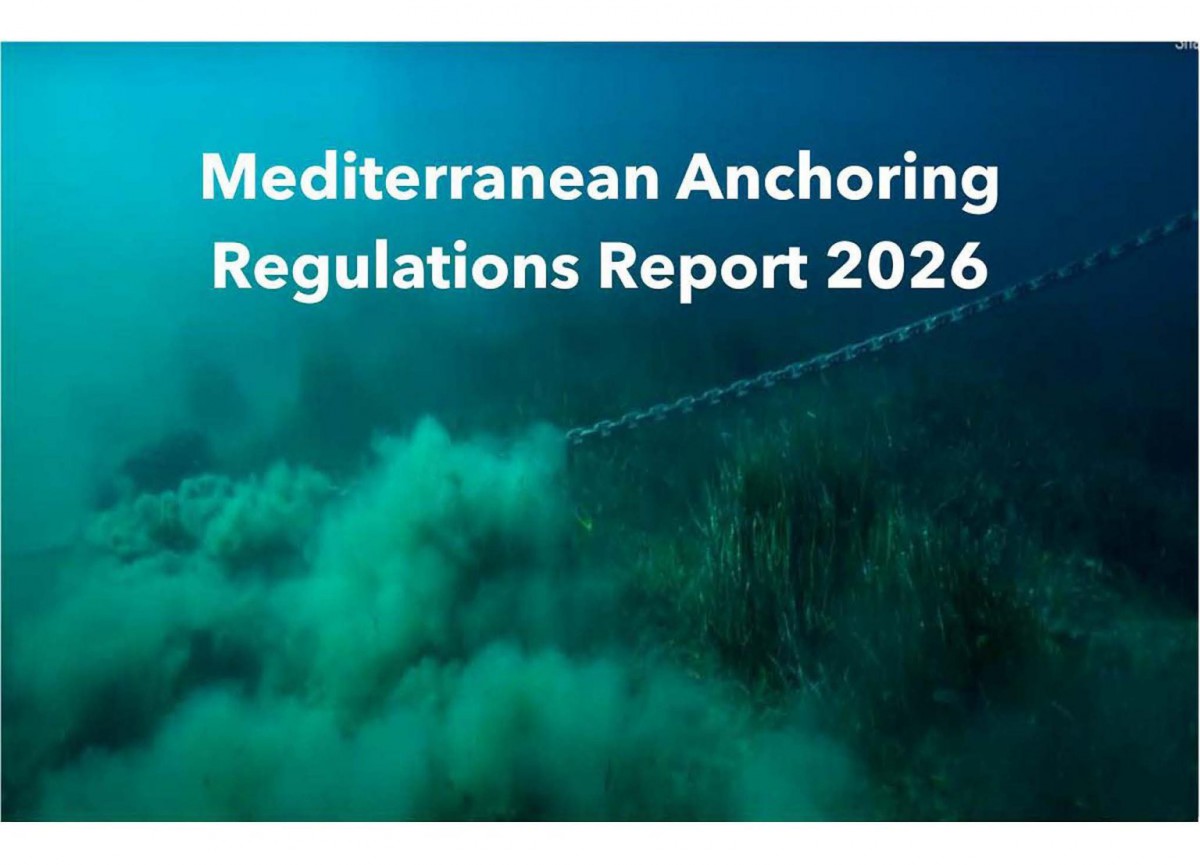 More than 179,000 vessels anchored on Mediterranean seagrass meadows in 2024, according to WWF research published last year, with roughly 45 per cent of them over 24 metres in length. Swiss Ocean Tech, builder of anchor-drag-monitoring system AnchorGuardian, has published the Mediterranean Anchoring Regulations Report 2026, a breakdown of anchoring rules across France, Spain, Croatia, Italy, Greece, Türkiye, Malta, Cyprus and Monaco.
Unsurprisingly, the guide finds that France carries the most detailed regulatory framework in the region, with vessel size thresholds ranging from 20 to 80 metres depending on sector. Spain, on the other hand, has just introduced Royal Decree 191/2026, a national framework protecting Posidonia oceanica and Cymodocea nodosa meadows and Malta and Cyprus are classed in the report as “local check” destinations with no single nationwide anchoring rule at all.
Croatia, Italy, Greece and Türkiye, meanwhile, are described as increasingly governed by local authority and protected area management rather than national law.
For all the pledges to digitalisation, however, planning apps have not replaced official charts, notices to mariners or local instructions. Nav&Co, the official French tool developed with SHOM, states explicitly that its regulatory information is indicative and not exhaustive. Donia carries the same limitation. An anonymous captain who read the report shared the following account:
“About five years ago, in a storm, I anchored near Le Gau, close to St Tropez. I had gone in close for shelter from the wind and waves, into an area with a sand bottom that showed as an anchoring zone on the Donia app, this was before Nav&Co existed. In the morning I was boarded by the French police. They explained that I was anchored illegally. It was inside a national park, and the anchoring symbol on the app only applied to vessels under 24 metres, although nothing on the app indicated that distinction. I was told to expect a court summons.
“I asked about our next intended anchorage, about ten miles down the coast, since I didn’t want to make the same mistake twice. The police said it fell under a different jurisdiction and that they didn’t know the rules there either. When I asked where I could find them, I was told to check the French notices to mariners, of which there are around a hundred, all in French.
“Knowing that wasn’t going to be practical, I asked if there was anything else I could do. It was the police themselves who suggested it: radio the local signal station, request permission to anchor and log the response in the ship’s log. They told me that even if the signal station gets it wrong and clears you to anchor somewhere restricted, you can’t be prosecuted if you were given that authorisation.”
Vessel length thresholds are frequently invisible at the point of decision, too. The 24-metre distinction that applied to this anchorage was not shown on the app the captain was using. According to the report, France is the only country where restrictions are built around vessel length thresholds in this way, and there is no consistent way to see them on a chartplotter overlay.
Enforcement carries real financial and custodial exposure in France. The guide cites Code des transports Article L5242-2, which allows for up to one year's imprisonment and a €150,000 fine for a maritime rule violation, rising to three years and €150,000 for damage to protected species or habitats, with fines potentially increased within national park core zones and reserves, and ecological damage compensation added on top of criminal penalties in some cases.
To read the full Mediterranean Anchoring Regulations Report 2026, click here.
NEW: Sign up for SuperyachtNewsweek!
Get the latest weekly news, in-depth reports, intelligence, and strategic insights, delivered directly from The Superyacht Group's editors and market analysts.
Stay at the forefront of the superyacht industry with SuperyachtNewsweek
Click here to become part of The Superyacht Group community, and join us in our mission to make this industry accessible to all, and prosperous for the long-term. We are offering access to the superyacht industry’s most comprehensive and longstanding archive of business-critical information, as well as a comprehensive, real-time superyacht fleet database, for just £10 per month, because we are One Industry with One Mission. Sign up here.
NEW: Sign up for
SuperyachtNewsweek!
Get the latest weekly news, in-depth reports, intelligence, and strategic insights, delivered directly from The Superyacht Group's editors and market analysts.
Stay at the forefront of the superyacht industry with SuperyachtNewsweek