
Croatia resets near-shore operations
Prof. Dr Christoph Ph. Schließmann explains the strict 500-metre tender rule introduced recently…
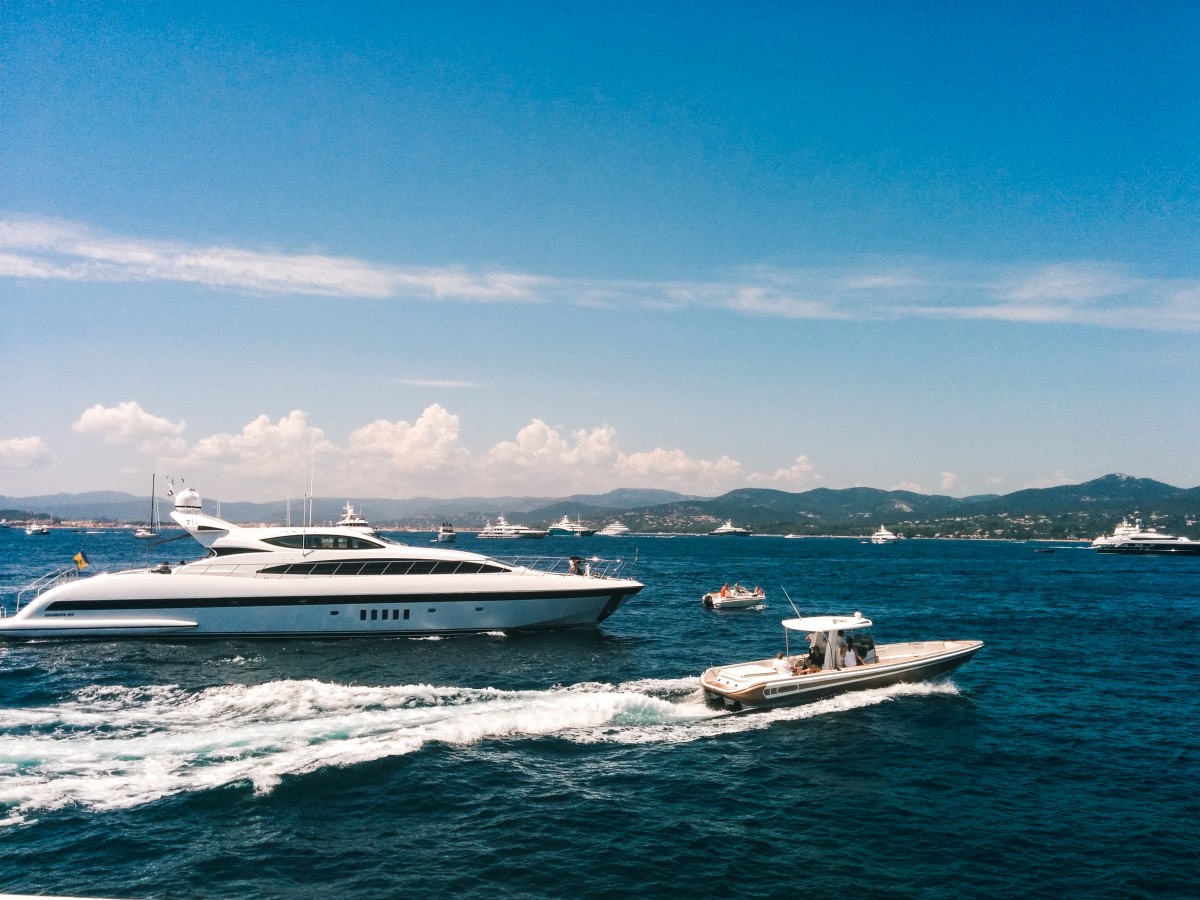
Croatia’s regulation “Pravilnik o sigurnosti pomorske plovidbe (NN 52/2025)” [Regulations on Maritime Navigation Safety] – in force since 29 March 2025 – refreshes national rules for navigation and coastal safety in Croatia’s internal waters and territorial sea. Two changes matter most for large-yacht programmes: a hard 500-metre operating radius for tenders (the small support boats carried by a yacht and registered as part of the yacht’s equipment) and stricter speed/distance limits near bathing shores, which are set locally for each bay or port.
The core change
Tenders without own registration stay within 500 metres of the parent yacht – the main vessel that carries and operates them – unless they are making a direct shuttle, meaning a non-stop, point-to-point trip without detours, either (i) between the yacht and the nearest safe mooring or designated anchorage or (ii) between a designated anchorage and the port responsible for that anchorage. In practice, “free-roaming” beyond 500 metres – scouting a distant cove, sightseeing, towing toys – does not meet the direct-shuttle test and is therefore not permitted.
Near-shore speeds and distances
The regulation requires reduced speed and minimum stand-off in bathing and coastal zones, but the exact numbers are set locally. Each Harbour Master’s office issues a Harbour Notice for its bay or port that defines the speed limits, the boundaries of bathing areas (usually marked near the beach), traffic corridors and any special restrictions. Rules you may have heard informally – such as “five knots close to shore” or “eight knots a little further out” – are only rough guidance. The binding limits are the ones printed in the current Harbour Notice for the area you’re in.
What owners, captains, managers and marinas should change now
Plan inside the “500-metre bubble”. For every intended anchorage, pre-mark on your navigation display the nearest safe mooring or anchorage by distance and conditions, not by convenience. Any tender movement beyond 500 metres should match that direct-shuttle route exactly – out, drop or pick, and back – without sightseeing loops.
Brief simply, then document. Build the rule into the daily rhythm: “Tenders operate within 500 metres; shore runs are direct shuttles.” Note the crew briefing in the logbook and keep easy evidence for inspections: a screenshot of the tender’s track from your plotter or tablet, a short log note describing the shuttle and a copy (paper or digital) of the current Harbour Notice.
Align the guest experience early. Frame watersports and swim drops inside the 500-metre radius. Shore visits should be sold as direct transfers to the nearest landing point rather than mini-tours. This avoids last-minute disappointments and keeps the schedule tight.
Operate tenders inside 500 metres by default; when you need to go further, make it a direct shuttle, document it and keep the local limits on your screen
Update contracts and on-board rules. Add clear, guest-friendly language to charter documents: lawful tender use, “no-wake” and “no-go” zones, and the direct-shuttle requirement. These short clauses reduce debate if plans change mid-day.
Marinas: make compliance obvious. Mirror NN 52/2025 and your local Harbour Notice in guest materials. Post multilingual boards that show bathing-area boundaries, speed arcs and recommended tender pick-up points. Define who your team calls in case of a collision, a personal-injury event or an environmental incident, and which documents visitors should present.
Five practical moves that cut risk
1. Set a 500-metre geo-fence on tender plotters or handhelds so crews get an audible alert when they approach the boundary.2. Pre-save the nearest-mooring or anchorage waypoint for each likely stop before dropping the hook.
3. Keep the latest Harbour Notice on board for every port on the itinerary and plot its boundaries on your electronic charts.
4. Capture basic evidence automatically: tender tracks and one-line shuttle notes; inspectors respond well to clear records.
5. Review insurance and toys: ensure personal-watercraft and towables are planned inside bathing-safe zones and the 500-metre radius unless the Harbour Notice allows otherwise.
Quick scenarios – decision clarity on the water
• Snorkel drop 350 metres from the yacht: compliant. You remain inside 500 metres.
• Scenic run 1.5 nautical miles down the coast: not compliant. That is beyond 500 metres and not a direct shuttle.
• Straight run to the closest jetty for dinner: compliant. That is a direct shuttle to the nearest safe landing.
• Shuttle with a coastal detour after drop-off: not compliant. Shuttles must be non-stop, point-to-point.
• Personal watercraft inside a marked bathing area: not compliant unless the Harbour Notice explicitly permits it, which is unusual.
Treat NN 52/2025 as the national baseline and the local Harbour Notice as the operational switch. Operate tenders inside 500 metres by default; when you need to go further, make it a direct shuttle, document it and keep the local limits on your screen. This is the simplest path to stay compliant while preserving a high-quality guest experience.
NEW: Sign up for SuperyachtNewsweek!
Get the latest weekly news, in-depth reports, intelligence, and strategic insights, delivered directly from The Superyacht Group's editors and market analysts.
Stay at the forefront of the superyacht industry with SuperyachtNewsweek
Click here to become part of The Superyacht Group community, and join us in our mission to make this industry accessible to all, and prosperous for the long-term. We are offering access to the superyacht industry’s most comprehensive and longstanding archive of business-critical information, as well as a comprehensive, real-time superyacht fleet database, for just £10 per month, because we are One Industry with One Mission. Sign up here.
Related news

Charter – it’s more than just about looks …
The golden rules to optimise charter income from a superyacht while still protecting the owner’s valuable asset
Opinion

All change for the yachting industry
How the evolution of the yachting landscape has created a much more complex but highly competent and professional environment for today’s mariners
Opinion
A double standard in maritime and aviation regulation
Felix Christians highlights a growing regulatory disconnect in maritime aviation that he feels deserves serious attention
Opinion
Don’t wait – lead
EU sustainability rules are changing – Water Revolution Foundation outlines what this means for yachting
Business
First chartering licences confirmed by Saudi Red Sea Authority
The SRSA has granted the first three operators charter licences as it prepares for the exponential growth of superyacht traffic in the region
Crew
Related news
Charter – it’s more than just about looks …
12 months ago
All change for the yachting industry
12 months ago
Don’t wait – lead
2 years ago
NEW: Sign up for
SuperyachtNewsweek!
Get the latest weekly news, in-depth reports, intelligence, and strategic insights, delivered directly from The Superyacht Group's editors and market analysts.
Stay at the forefront of the superyacht industry with SuperyachtNewsweek